You hit that familiar decision point. Your refrigerator, washer, or dishwasher is more than 10 years old, and something just failed. The technician hands you a repair quote. Now you have to decide whether you should repair an appliance that old or put that money toward a replacement.
If you live or run a business in Lake Elsinore, that decision ties into more than age. Our heat, hard water, power events, and rising energy costs all play a role. As a local home appliance repair and HVAC repair company, Appliance Repair Lake Elsinore has this conversation with customers every week. In this guide, you will get a clear framework you can use for any 10+ year old appliance, so you stop guessing and start deciding with real numbers.
Why The “10‑Year Question” Matters In 2026
You will hear a lot of rules of thumb about appliance life. In practice, most major appliances fall into ranges like:
- Refrigerators: often 10 to 15 years
- Washers and dryers: often 10 to 14 years
- Dishwashers: often 8 to 12 years
- Ranges and ovens: often 13 to 20 years
Those are national averages. In Lake Elsinore and surrounding areas, heat, dust, hard water, and power surges can pull those numbers down. If you have read our guide on how local climate shortens appliance life, you know why age alone does not tell the whole story.
The “10‑year rule” comes from the idea that:
- Many appliances hit more serious wear after year 8 to 10.
- Newer models often offer better efficiency and safety.
- Repair costs can start to bump into what a replacement would cost.
However, 10 years is a checkpoint, not an automatic expiration date. Your job is to look at age in context with the appliance type, condition, repair cost, and energy use.
The Basic Framework: Age, Cost, And Performance
When you ask whether it is worth repairing a 10+ year old appliance, you should look at three main factors.
1. Age And Lifespan
Start by asking:
- How old is the appliance?
- What is the typical lifespan for this type and quality level?
A 10‑year‑old fridge that has been quietly running without major issues is different from a 10‑year‑old dishwasher that has leaked and needed multiple board swaps.
2. The 50/50 Rule
Many professionals use a simple guideline:
- If the repair costs more than 50% of the price of a similar new appliance, and the unit is at or past 50% of its expected lifespan, replacement is usually smarter.
This is not a strict law, but it is a good red flag. If you have a 12‑year‑old washer and the quote is close to the cost of a new mid‑range washer, that is your signal to slow down and think about replacement.
3. Performance And Reliability
Ask yourself:
- Has this appliance been mostly reliable until now, or has it needed multiple repairs?
- Does it still perform well when it runs, or has performance slowly declined?
- Are there any safety concerns, such as recurring overheating, breaker trips, or leaks near electrical connections?
A single failure on an otherwise reliable appliance can be worth fixing. A long list of small issues, combined with age, points toward replacement.
Appliance‑By‑Appliance: When Repairing After 10 Years Still Makes Sense
You should not treat every appliance the same way. Here is how to think about each major category.
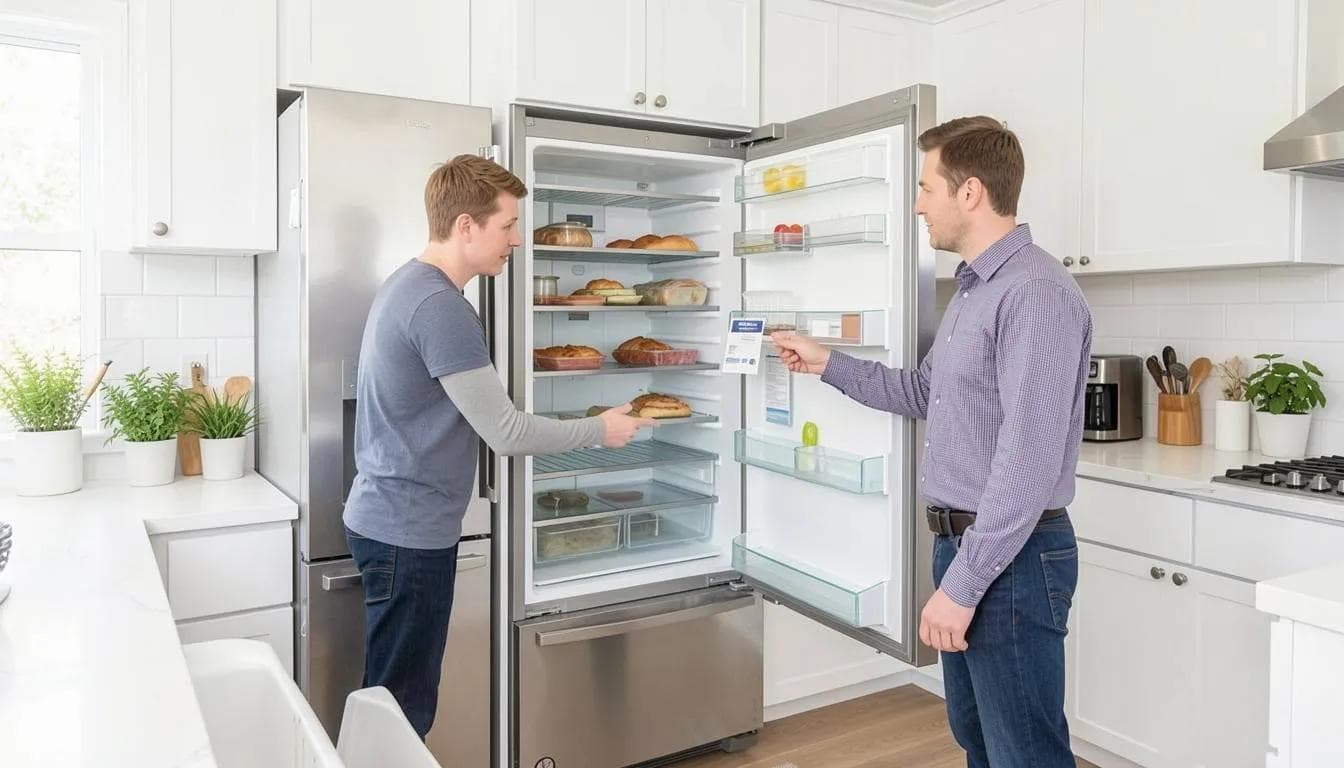
Refrigerators And Freezers
Refrigerators and freezers matter because failures risk food safety and spoilage.
Repair often makes sense for:
- Failed fans, sensors, door seals, and simple electrical components.
- Ice maker problems that do not affect core cooling.
Repair is harder to justify when:
- The sealed system has a leak or the compressor fails on a very old unit.
- The fridge already runs constantly, struggles to hold temperature, and has visible rust or cabinet damage.
On a 10+ year old fridge, a major sealed‑system repair is rarely cost‑effective unless the unit is high‑end or built‑in. Basic repairs can still be a good value if the appliance is otherwise healthy.
Washers And Dryers
Washers and dryers see mechanical stress but can last a long time with simple fixes.
Repair often makes sense for:
- Belt replacements on dryers.
- Pump, hose, or door lock replacements on washers.
- Simple motor or capacitor issues.
Replacement is more attractive when:
- The tub or drum is damaged.
- There is severe rust in the cabinet or around the door.
- Electronics have failed twice or more.
A 10‑year‑old washer that only needs a new pump may still have many years left, especially if it has not seen heavy use. For a dryer, a new heating element or thermostat can be very cost‑effective.
Dishwashers
Dishwashers see a lot of hot water, detergent, and hard water. They often age faster than washers or fridges.
Repair can make sense for:
- Drain pump issues.
- Door latch or simple control problems.
- Minor leaks from a failed seal.
Replacement is often better when:
- The tub has cracks or heavy rust.
- The control board is expensive and the machine is 10+ years old.
- Cleaning performance is poor even with good water pressure and quality detergent.
In a hard water area like Lake Elsinore, scale can accelerate aging. If you want your next dishwasher to last longer, pair replacement with better hard water management.
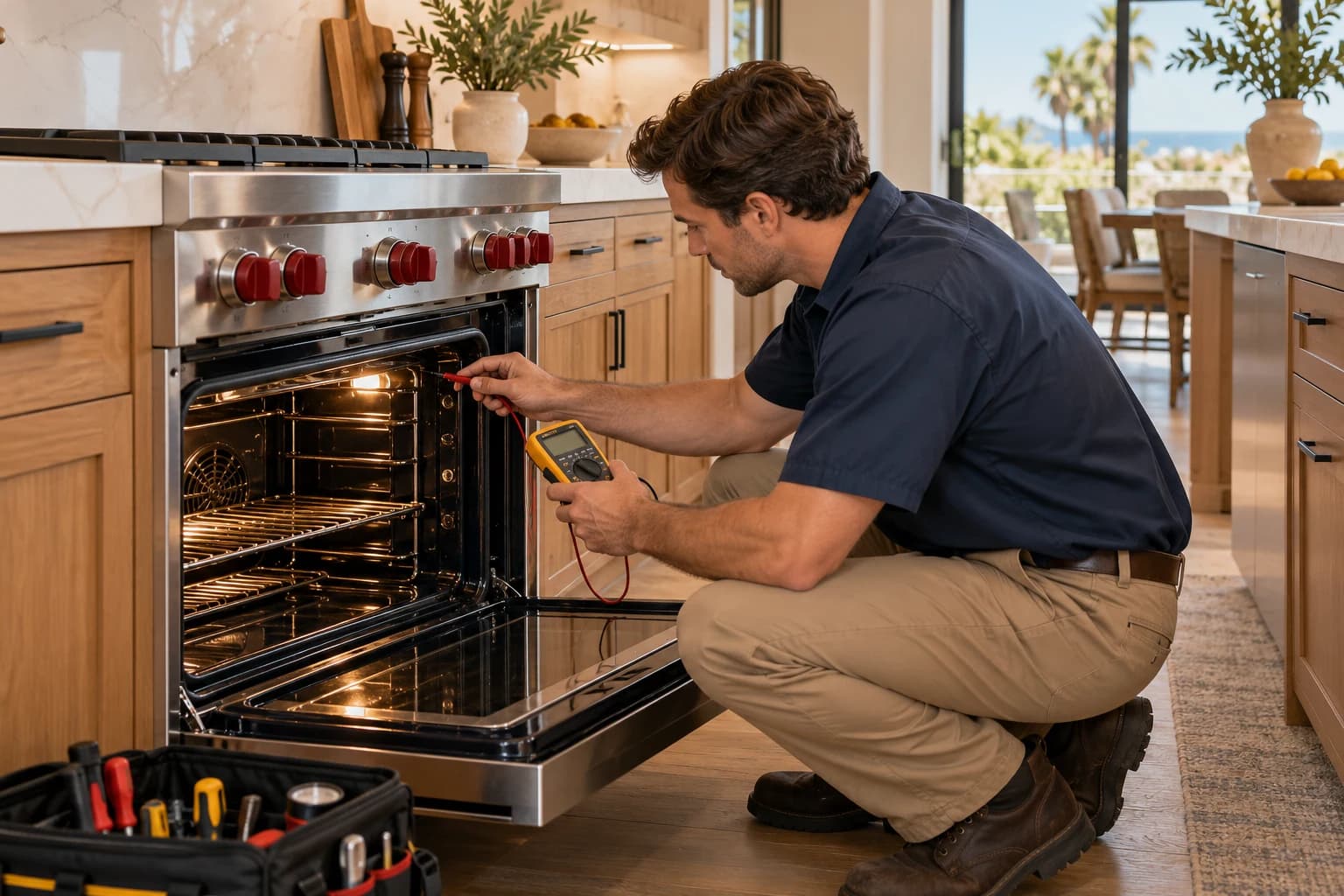
Ranges And Ovens
Ranges and ovens, especially gas units, can last a long time.
Repairs that often make sense even after 10 years include:
- Igniter replacement for gas ovens.
- Element replacement for electric ranges.
- Simple thermostat or control repairs for units in otherwise good condition.
Replacement is worth considering when:
- The range has major structural damage or severe rust.
- The control system is obsolete and parts are no longer available.
- Safety issues such as repeated gas leaks or burnt wiring appear.
Sometimes, an older range has value beyond simple function. In those cases, saving it can be worth it. We had a case in Lake Elsinore where saving a 1953 O’Keefe & Merritt made more sense to the owner than replacing it, because it was part of the home’s character.
The Money Side: Repair Costs vs New Appliance Costs
To make a clear decision, you need to compare real numbers.
Typical Repair Costs
Common repairs fall into ranges such as:
- Simple parts and labor: lower cost (for example, door switches, belts, minor sensors).
- Mid‑range repairs: pumps, fans, igniters, simpler boards.
- High‑cost repairs: compressors, sealed‑system work, major control boards.
You should always ask your technician for:
- A written estimate that breaks down labor and parts.
- An honest opinion about how this repair fits into the broader condition of the appliance.
Compare To Replacement
Then compare that quote to:
- The price of a comparable new appliance, not the cheapest and not the most premium.
- Any delivery, installation, haul‑away, and extended warranty costs.
For example, if:
- A new mid‑range refrigerator would cost you $1,200 delivered and installed.
- The compressor repair on your 12‑year‑old fridge will cost $900.
It usually makes more sense to put that $900 toward a new unit.
Look At Lifetime Costs
You should also add in:
- Money you have already spent on recent repairs.
- The likely cost of future repairs on an aging appliance.
A single repair on a previously trouble‑free 10‑year‑old dryer is one thing. A second major repair on a 10‑year‑old fridge that has already failed twice is another.
For commercial owners, add:
- The cost of downtime.
- The risk to inventory, like food in coolers.
- Staff time spent dealing with ongoing problems.
Sometimes business downtime alone justifies replacement faster than residential timelines.
Energy Use And Utility Bills: Old vs New Appliances
In 2026, energy use plays a bigger role in your decision than it did 10 or 15 years ago.
How Older Appliances Use Energy
Older refrigerators, washers, and dryers can draw significantly more power than current high‑efficiency and ENERGY STAR models. For example:
- A 15‑year‑old top‑freezer refrigerator can use hundreds of kWh more per year than a new efficient model.
- Old washers often use more hot water, which increases both electricity and gas costs.
Over several years, that difference can add up to hundreds or thousands of dollars, especially in an area with tiered electric rates.
Local Power Costs
Utilities across Southern California have increased rates over time. In tiered systems, once you pass a certain usage threshold, your per‑kWh cost jumps to a higher level.
That means:
- An inefficient older appliance does not just add a little to your bill.
- It can help push your entire bill into higher tiers.
So when you decide whether you should repair an older fridge or upgrade, you should consider how much electricity it uses relative to new options.
When An Upgrade Makes Sense
Upgrading to a new efficient appliance often makes sense when:
- Your current unit is 10+ years old and not very efficient.
- The repair is expensive.
- You plan to stay in the home or keep the business long enough to see savings.
You can also treat upgrades as part of a broader energy strategy. For instance, if you are already looking at energy rebates for Lake Elsinore homeowners, it may be smart to align appliance upgrades with other efficiency projects.
Incentives, Rebates, And Tax Credits That Affect Your Choice
In 2026, federal programs and local rebates influence the math between repair and replacement, especially for HVAC and some high‑efficiency appliances.
You may be able to:
- Claim tax credits for qualifying heat pumps and HVAC upgrades.
- Use local utility rebates for energy‑efficient equipment.
- Combine these benefits with seasonal sales or financing.
While most of these incentives focus on HVAC and some larger systems, the overall impact is the same. If you are already considering a major HVAC or appliance project, a credit or rebate can shorten the payback period and tilt your decision toward replacement.
Non‑Financial Factors: Reliability, Features, And Sustainability
Money matters, but it is not everything.
Reliability And Peace Of Mind
After 10 years, even a well‑maintained appliance is statistically more likely to fail again. You have to ask:
- How much disruption does another failure cause in your life or business?
- Are you comfortable with occasional repairs, or do you want fresh equipment and a reset on reliability?
For some people, one more well‑priced repair is fine. For others, the stress and downtime are more important than the dollars.
Features And Safety
Newer appliances can offer:
- Better temperature control for fridges and ovens.
- Quieter operation for washers, dryers, and dishwashers.
- Improved safety features and better leak detection.
If you care about noise, more precise cooking, or specific features like better sanitizing cycles, these upgrades can be worth the switch even if an older unit is still repairable.
Environmental Considerations
There is also a sustainability piece:
- Repairing extends the life of existing products and keeps items out of landfills.
- Replacing inefficient appliances with efficient ones can reduce energy use and emissions.
If you do replace, you should handle the old unit responsibly. You can use our local guide to recycling old appliances in Lake Elsinore to make sure the transition is handled correctly.
How Appliance Repair Lake Elsinore Helps You Decide
We see repair vs replace decisions all the time. Our goal is not to push you in one direction, but to give you clear information.
A typical “10+ year old appliance” visit includes:
- A thorough diagnostic to identify what actually failed.
- A written estimate with parts and labor.
- A simple explanation of how that repair fits into the overall age and condition of your appliance.
We then talk through:
- How much a comparable replacement would cost.
- How your local climate, water, and power conditions affect future lifespan.
- Whether there are safety concerns that change the picture.
We bring the same honest approach to major HVAC decisions as you see in our Canyon Lake HVAC overhaul spotlight. Sometimes a big upgrade is worth it. Sometimes a strategic repair buys you several more good years at a fraction of the cost.
If you want to understand how to evaluate providers who give you these options, you can also review our 2026 guide on finding reliable appliance repair in Riverside County.
Simple Step‑By‑Step Checklist For Any 10+ Year Old Appliance
You can use this checklist in your home or business every time an older appliance acts up.
- Confirm the age. Check the serial number, receipt, or installation date and write the age down.
- Identify the appliance type and lifespan range. Use basic lifespan ranges as context. For example, a 10‑year‑old range is middle aged, while a 10‑year‑old dishwasher is closer to expected retirement.
- Gather repair history. Write down major repairs and costs from the last few years.
- Get a clear repair quote. Ask for a written estimate from a reputable local company like Appliance Repair Lake Elsinore.
- Get a realistic replacement estimate. Look at what a similar mid‑range new unit would cost, including delivery and installation.
- Apply the 50/50 rule. If the repair exceeds about 50% of replacement cost and the appliance is near or past its average lifespan, lean toward replacement.
- Factor in energy use. If the appliance is clearly inefficient, consider how much a newer model could save on your utility bills over several years.
- Consider comfort, reliability, and downtime. If failures create serious disruption, lean more toward replacement once age and costs line up.
- Decide and plan next steps. If you decide to repair, plan to revisit replacement in a few years. If you choose replacement, plan responsible disposal and any needed electrical or plumbing updates.
Conclusion: How To Stop Guessing And Make A Confident Decision
Repairing an appliance that is more than 10 years old is not automatically right or wrong. It depends on the appliance type, repair cost, energy use, reliability history, and how much disruption you can tolerate.
If you use the structure in this guide and bring in a trusted technician for honest diagnostics, you can take the guesswork out of your decisions. You can choose to repair once more, plan for replacement later, or upgrade now with clear eyes and a clear budget.
If you are staring at a quote for a 10+ year old fridge, washer, dryer, dishwasher, or range and you are not sure what to do, Appliance Repair Lake Elsinore can help you walk through the numbers. You can reach out through the contact page to schedule a visit and get a clear “repair vs replace” recommendation based on your actual appliance, your home or business, and your long‑term plans.