Hard water is one of those silent problems you stop seeing because you live with it every day. You notice spots on your glasses, stiff towels, soap that never seems to rinse off, and white crust around your faucets. What you do not see is the way Lake Elsinore’s hard water slowly chokes your water heater, dishwasher, washing machine, and even your HVAC equipment.
If you live or run a business here, hard water is not just an annoyance. It is a real cost driver. It shortens appliance life, raises your gas and electric bills, and increases how often you call an appliance repair company. In this guide, you will see exactly how hard water affects your equipment, which solutions actually work in Lake Elsinore, and how to build a practical plan for both residential and commercial properties.
As a local home appliance repair and HVAC repair specialist, Appliance Repair Lake Elsinore works on real systems fed by Elsinore Valley Municipal Water District (EVMWD) water every day. So this is not theory. This is what we see in your water heaters, dishwashers, and commercial dish rooms on real jobs.
Why Hard Water Is A Big Deal In Lake Elsinore
Hard water means your water carries a high load of dissolved minerals, mainly calcium and magnesium. EVMWD blends groundwater and imported supplies, and those sources naturally pick up minerals from local rock and soil.
On paper, hardness shows up as grains per gallon (gpg) or milligrams per liter. In practical terms, it shows up as:
- White or chalky deposits on faucets and showerheads
- Soap scum that clings to tubs, tile, and glass
- Cloudy glassware even right out of the dishwasher
- Scale buildup on heating elements and in pipes
Lake Elsinore falls into the “hard” to “very hard” range. That means your water is more aggressive on metal surfaces and heating elements than in many other parts of California.
In 2026, more homeowners and businesses care about this for three reasons:
- Energy costs remain high
- Appliances cost more to replace
- Guests and customers judge you by cleanliness and feel
If you have already read about how Lake Elsinore’s climate shortens appliance life, you can think of hard water as the inside version of that same stress. The climate dries and overheats components from the outside, and hard water attacks them from the inside.
How Hard Water Damages Appliances And Plumbing
Hard water is harmless to drink for most people, but it is hard on equipment.
Scale In Water Heaters, Dishwashers, And Washers
When you heat hard water, the minerals fall out of solution and form scale. That scale sticks to any hot surface it can find.
In a water heater, scale settles at the bottom of the tank and coats the heating surface. Your burner or element now heats a layer of rock before it heats water. This:
- Wastes energy
- Raises tank temperature stress
- Increases the risk of popping, rumbling, and early failure
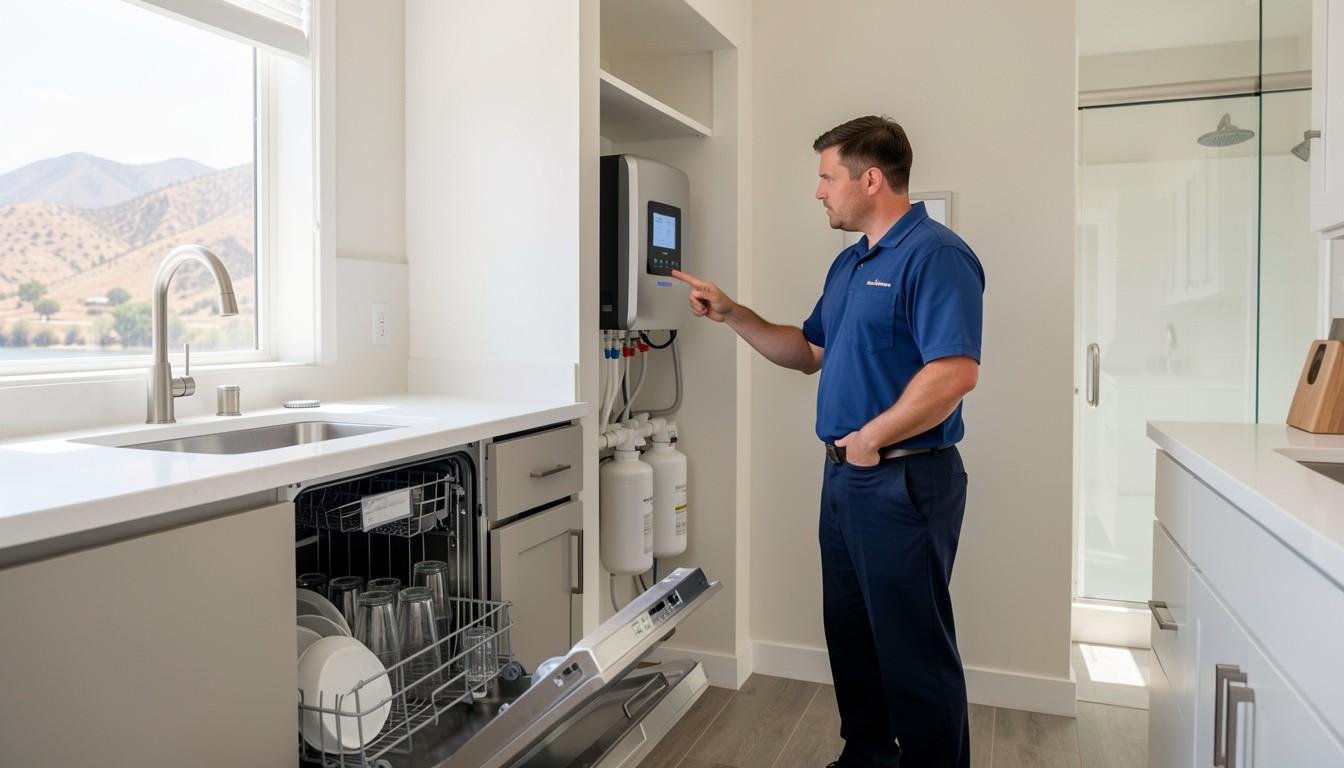
In a dishwasher, scale coats the heating element and internal surfaces. Over time, the heater works harder, the element can crack, and spray arms clog, which hurts cleaning performance.
In a washing machine, scale and sediment can build inside the tub, pump, and hoses. This leads to poor rinsing, odor, and extra strain on the pump.
Commercial Equipment Takes A Beating
If you run a restaurant, café, hotel, or salon, hard water hits your bottom line even harder.
- Commercial dishwashers show more spotting on glassware and silverware
- Ice machines develop scale on evaporator plates and internal lines
- Guest showers in hotels and rentals show crusty buildup and weak spray
- Commercial laundries see rough, dull linens and higher detergent use
In hospitality, guests judge quickly. Cloudy glassware, streaky dishes, and “crunchy” towels hurt your brand even if your kitchen runs perfectly.
The Hidden Energy Cost
Scale is an insulator. Every millimeter of buildup in a water heater or on a heat exchanger forces your equipment to burn more gas or pull more electricity to do the same job.
Studies show that even a small amount of scale can increase energy use by double‑digit percentages in heaters. Over years, that is a quiet but real cost that you pay every month on your utility bill.
The Financial Case: What Hard Water Really Costs You
You feel hard water in small ways every day. But the real impact shows up when you zoom out to five or ten years.
Shorter Appliance Lifespans
Manufacturers often quote average lifespans for appliances, such as:
- 8–12 years for a dishwasher
- 8–10 years for a traditional water heater
- 10–14 years for a washing machine
In hard water areas, real lifespans often land at the low end of those ranges or below, especially with poor maintenance. That means:
- Replacing a $1,200 water heater a few years early
- Replacing $800–$1,500 dishwashers more often in homes and restaurants
- More frequent calls to an appliance repair company for leaks, heater failures, and pump issues
From an appliance repair perspective, we see a direct pattern. Homes and businesses with no treatment have more scale‑related failures and more “it is not worth fixing” calls once equipment is heavily damaged.
The Softener Payback
Water softener manufacturers and independent analyses show that softeners can pay for themselves over time through:
- Lower energy use for water heating
- Lower detergent and soap use
- Longer appliance life and fewer service calls
Over a 10‑year period, many Lake Elsinore households can see payback in roughly 3–5 years, then enjoy net savings from year 5 onward. Small businesses with high hot water use, such as restaurants and laundries, often see even faster payback because their equipment runs more hours per day.
Testing Your Water In Lake Elsinore
Before you invest money, you should know how hard your water actually is.
Use Local Reports And Simple Kits
EVMWD publishes annual Consumer Confidence Reports that include general water quality data. These give you a ballpark for hardness in your service area.
You can also use simple home test strips or drop kits from hardware stores. They do not give lab accuracy but they tell you if you are in soft, moderate, hard, or very hard territory, and they can be very useful for before‑and‑after checks.
When To Get A Professional Test
A professional water test is worth it if:
- You have very inconsistent results from home tests
- You operate a restaurant, hotel, or other commercial site where water quality affects customers
- You plan to invest in a whole‑house or commercial treatment system and want exact numbers
A detailed test can show hardness, iron, manganese, and other factors that affect which system you should choose.
Solution Type 1: Salt‑Based Water Softeners
Salt‑based water softeners are the classic solution, and for very hard water, they are still the most effective.
How They Work
A salt‑based softener uses ion exchange. The system passes water through a resin bed charged with sodium or potassium ions. The resin grabs calcium and magnesium and releases sodium or potassium in their place.
The result is “soft” water that no longer forms scale. Soap lathers better. Spotting drops dramatically. Scale inside heaters and pipes stops growing and may slowly reduce.
Performance And Protection
In real use, a properly sized and maintained softener can:
- Reduce scale by up to 90–98 percent
- Cut detergent use for laundry and dishwashing
- Help water heaters and dishwashers run closer to their rated efficiency
- Extend the life of water‑using appliances and fixtures
From what we see in the field, homes with long‑running softeners have cleaner heater tanks, cleaner dishwasher internals, and fewer scale‑related service calls.
Costs, Maintenance, And Rules
You should consider:
- Upfront cost of the system and installation
- Ongoing cost of salt or potassium
- Occasional resin bed service or replacement
- Space near the main water line
In some California districts, regulators watch salt discharge from self‑regenerating softeners because it can affect wastewater treatment. EVMWD has published guidance on softeners in the past, so you should always check the latest guidelines before you install one.
If high efficiency and low salt use matter to you, you can look at modern high‑efficiency softeners that regenerate based on demand rather than a fixed timer. This cuts salt use and waste.
Solution Type 2: Salt‑Free Conditioners And Filters
Salt‑free systems have become more popular in the last decade. They often appeal to people who want less maintenance or who have concerns about salt discharge.
What They Actually Do
Most salt‑free “softeners” are really conditioners. Many use a process called template‑assisted crystallization. They do not remove calcium and magnesium. Instead, they change the form of the minerals so they have a harder time sticking to surfaces.
In practice, this can:
- Reduce scale on fixtures and in some equipment
- Make cleaning easier
- Reduce spotting in some situations
However, they generally do not perform as well as true softeners in very hard water environments. Expect reduction, not elimination.
When Salt‑Free Makes Sense
A salt‑free system might be a good fit if:
- Your hardness is moderate rather than extreme
- You have space or drain limitations
- You want lower maintenance and no salt bags
- You mainly care about visible scale and less about 100 percent removal
Some businesses pair a salt‑free conditioner with other treatment steps to balance performance, cost, and local rules.
Point‑Of‑Use Solutions For Specific Appliances
You do not always need to go “all in” on a whole‑house system to see benefits. You can treat pain points first.
Under‑Sink And Drinking Water Filters
These systems improve taste and remove certain contaminants, but many do not treat hardness by default. You can choose units that combine filtration with some scale control, but know that these usually protect only that tap, not your whole house.
Scale Inhibitors For Water Heaters And Tankless Units
There are point‑of‑use cartridges and systems that feed a small amount of scale‑inhibiting agent into the line before a heater. These can help tankless units and commercial heaters run longer between descaling sessions.
Dishwasher And Coffee Equipment Maintenance
Even with treatment, you still need regular maintenance:
- Run dishwasher cleaner or descaling solutions monthly in hard water
- Clean spray arms and filters
- Descale coffee machines and ice makers on a schedule
From our service calls at Appliance Repair Lake Elsinore, the homes and businesses that follow these routines see fewer breakdowns and better cleaning results, even before they invest in large treatment systems.
Commercial Hard Water Strategies In Lake Elsinore
If you run a commercial property here, you should treat hard water as a core part of your maintenance plan.
Restaurants And Cafés
Food service sites should consider:
- A dedicated softener or conditioner for dish machines
- Filtration and scale control for ice machines and beverage stations
- Regular descaling for espresso machines and coffee brewers
Your goal is clear glassware, clean plates, and reliable equipment. The extra cost of treatment often pays back quickly through fewer service calls and a better guest experience.
Hotels, Short‑Term Rentals, And Gyms
In hospitality and fitness, water quality shows up in:
- How showers feel
- How towels and linens feel
- How bathrooms and fixtures look
Soft water or conditioned water lets you deliver softer towels, better showers, and cleaner fixtures with less labor. It also reduces wear on in‑house laundry equipment.
Other Commercial Sites
Salons, car washes, and any business with high water use can benefit from treatment. Scale does not care if it grows on a water heater in a home or a boiler in a commercial plant. It will reduce efficiency and shorten lifespan either way.
Creating A Hard Water Action Plan For Your Property
You do not have to fix everything at once. A simple step‑by‑step plan works best.
- Test your water or review current EVMWD data so you know your hardness level.
- List your critical appliances and fixtures that hard water hits the hardest, such as water heaters, dishwashers, ice machines, and commercial gear.
- Decide whether a whole‑house or whole‑building solution makes sense, or if you should start with point‑of‑use protection.
- Get quotes for salt‑based softeners, salt‑free conditioners, or hybrid systems that match your hardness, space, and budget.
- Add maintenance to your calendar, including descaling, filter changes, and annual appliance inspections.
If you are planning larger upgrades, such as new water heaters or HVAC changes, you can also look at current energy rebates for Lake Elsinore homeowners and businesses. Some efficiency projects can reduce both your water‑related and energy costs over time.
A local appliance repair company like Appliance Repair Lake Elsinore can help at several points. We see the inside of your appliances, so we can tell you where hard water is already causing damage. We can also help you decide whether it makes sense to repair a heavily scaled unit or replace it after you address water quality.
If you want guidance on choosing a service provider for installation or ongoing maintenance, you can also read our guide on finding reliable appliance repair in Riverside County so you know what to look for before you hire anyone.
Conclusion: Turn Hard Water From A Liability Into A Managed Cost
Hard water will not go away in Lake Elsinore, but your problems with it can. Once you understand how it affects your appliances, plumbing, and energy use, you can treat it as a cost you manage rather than a constant surprise.
By testing your water, choosing the right mix of softening or conditioning, and keeping up with simple maintenance, you protect your home or business from unnecessary repairs and replacements. You save money, you improve daily comfort, and you give your equipment a fair chance to reach its full lifespan.
If you already see scale, leaks, or performance issues in your water‑using appliances, or if you want a clear plan before you invest in treatment, Appliance Repair Lake Elsinore can inspect your current setup and walk you through practical next steps. You can reach out through the contact page to schedule a visit and start turning hard water into a controlled factor instead of a constant frustration.