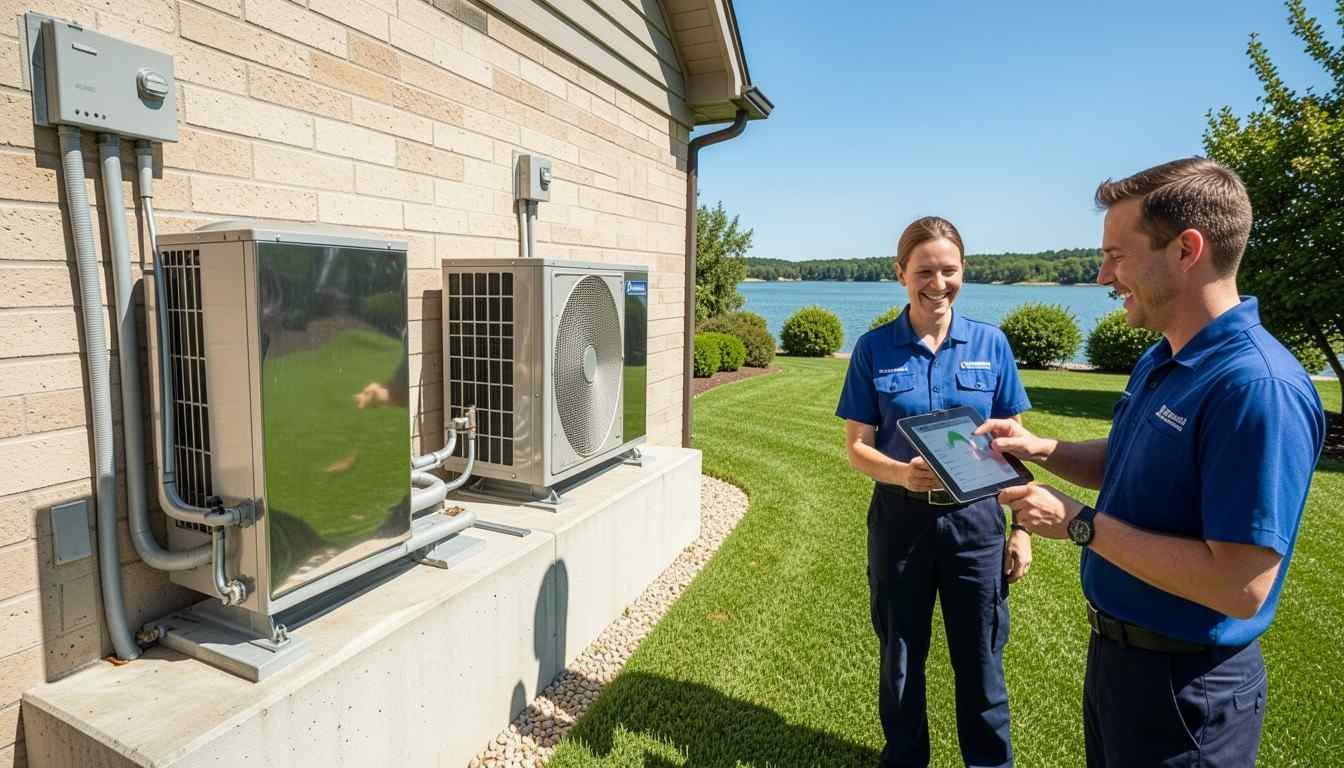
Some HVAC jobs are straightforward. Then there are projects that change how a home feels every single day. This customer spotlight is one of those. It is a major HVAC overhaul we completed for a family in Canyon Lake, and it shows you what is possible when you stop “just replacing the box” and start thinking about the whole system.
As a local appliance repair company that also handles HVAC repair, Appliance Repair Lake Elsinore sees a lot of aging systems across Lake Elsinore and Canyon Lake. In this case study, you will see why this Canyon Lake home needed more than a quick fix, how we designed the upgrade, what results the family saw, and what you can take away for your own home or light commercial property.
Meet Our Canyon Lake Customer And Their HVAC Challenge
Our customer is a family living in a two‑story home in Canyon Lake. The house is roughly 2,400 square feet, built in the early 2000s, with common Inland Empire features:
- Vaulted ceilings in the living area
- Bedrooms upstairs
- A traditional split AC and gas furnace setup
Their complaints probably sound familiar:
- The upstairs stayed hot, especially in the late afternoon.
- The system ran for long stretches during summer and still did not feel comfortable.
- The outdoor unit was loud, and the indoor blower felt “harsh.”
- Electric bills kept creeping up every summer.
On top of that, the system was past 15 years old. They had already paid for a few repairs in recent years and did not want to sink more money into a unit that was clearly aging out.
They called a Lake Elsinore based company like Appliance Repair Lake Elsinore instead of a big‑box installer because they wanted more than a quick quote. They wanted to understand what was really going on and whether a major HVAC overhaul would be worth it.
The Canyon Lake Climate: Why Standard Systems Struggle Here
Canyon Lake shares a lot of climate traits with Lake Elsinore. Summers are long, hot, and dry. Inland valleys hold heat, and many homes see strong sun exposure.
That means:
- AC systems run many hours per day in peak months.
- Second floors often get hotter than first floors.
- Attic and roof temperatures can soar, raising duct temperatures.
If you have read about how Lake Elsinore’s climate stresses appliances and HVAC systems, you know why this matters. Constant long runtimes, high attic heat, and summer peaks shorten the life of compressors, motors, and electronics.
Also, new SEER2 standards that took effect in 2023 changed the way we rate and install systems. Many older units in Canyon Lake:
- Have lower SEER ratings than current minimums.
- Were sized based on older assumptions and less efficient ductwork.
In plain terms, a lot of homes have systems that were “okay” when installed but are now outclassed by newer technology and current energy costs.
Our HVAC Assessment: What We Found During The Initial Visit
Instead of going straight to a sales pitch, we started with a thorough assessment.
We looked at:
- Age and model of the existing condenser and furnace.
- Nameplate SEER rating of the old system.
- Condition of the indoor evaporator coil.
- Duct size, layout, and insulation.
- Airflow at supply registers and return grilles.
- Electrical panel capacity for a new system.
Key findings:
- The outdoor unit was a builder‑grade 10 SEER system, well below current efficiency levels.
- The evaporator coil showed signs of age and limited past cleaning.
- Ductwork had several sharp turns, restricted runs to the upstairs, and visible leaks at joints.
- The single downstairs return did not provide ideal airflow for a two‑story layout.
We also listened carefully to the family:
- They wanted quieter operation.
- They wanted more stable temperatures upstairs.
- They wanted lower bills but did not want to sacrifice comfort.
This combination pointed us toward a full system rethink, not just a condenser swap.
Designing The Overhaul: From “Just Replace The Box” To A Whole‑System Plan
Too many upgrades in Canyon Lake go like this: “We pulled out the old condenser and put in a bigger one.” The result is often short‑cycling, humidity issues, and no real improvement upstairs.
For this home, we built a complete plan.
Right‑Sizing And Efficiency
First, we calculated an appropriate cooling load instead of guessing based on square footage alone. We considered:
- Insulation levels
- Window area and orientation
- Number of occupants
- Duct layout
We then recommended a high‑efficiency system that met new SEER2 standards. For this family, an inverter‑driven heat pump made strong sense because:
- It can modulate capacity instead of running full blast or off.
- It handles long, hot seasons efficiently.
- It provides heating as well, which adds flexibility if gas costs change in the future.
We also discussed the option of staying with a traditional AC and gas furnace. In the end, the family liked the comfort and energy profile of an inverter heat pump.
Ductwork And Airflow
We addressed the ductwork issues that caused the upstairs to bake:
- We resized and rerouted some ducts to increase airflow to the second floor.
- We sealed leaks at joints and plenums.
- We added a dedicated return on the upper level to improve circulation.
Ductwork is often the “hidden” cause of comfort problems. We have talked about system stress from climate and hard water in other articles, but duct design is just as important for HVAC comfort and efficiency.
Controls And Zoning
To give the family more control, we added:
- A smart thermostat with scheduling and remote access.
- Simple zoning adjustments through dampers to focus cooling where it mattered most at different times of day.
This gave them control without making the system overly complicated.
The Installation: What A Major HVAC Overhaul Looks Like In Real Life
A major HVAC overhaul is more than swapping a metal box in the yard.
Day 1: Removal And Prep
We:
- Safely recovered refrigerant from the old system.
- Removed the old condenser, furnace, and coil.
- Opened key duct runs in the attic and noted areas for replacement or redesign.
We also protected interior surfaces and kept the work area clean, because we were working in a lived‑in family home.
Day 2: New Equipment And Duct Work
We:
- Set the new outdoor unit on a level pad with proper clearance.
- Installed the new air handler and coil in place of the old furnace and evaporator.
- Ran new refrigerant lines as needed and ensured correct insulation.
- Replaced and rerouted key duct sections to improve airflow, especially to the upstairs.
We coordinated electrical work to ensure the panel and breakers were correct for the new equipment.
Day 3: Controls, Startup, And Balancing
We:
- Wired up the smart thermostat and tested communication with the new system.
- Pulled a proper vacuum and charged the refrigerant circuit to manufacturer specs.
- Tested the system under cooling mode and checked supply and return temperatures.
- Used airflow readings to balance registers so each room received appropriate flow.
At the end, we walked the family through:
- How to use the new thermostat.
- What noises and behavior were normal for an inverter system.
- What signs to watch for in case of future issues.
The Numbers: Comfort, Energy, And Cost Results After The Overhaul
This is where you see whether an overhaul was worth it.
Comfort
Before, the upstairs often sat 3–5 degrees hotter than the thermostat setting. After the upgrade:
- Upstairs temperatures stayed within 1–2 degrees of setpoint even on hot afternoons.
- The system ran more often at low speed rather than short bursts at high speed, which felt smoother.
- Noise dropped both outside and inside. The inverter condenser was significantly quieter than the old unit.
Energy Use
Exact savings will vary by household, but based on efficiency ratings and local climate, we estimated:
- Seasonal cooling energy use dropping by roughly 25–35 percent compared to the old 10 SEER unit.
- Additional savings from reduced duct leaks and better airflow.
The family monitored their first full summer and reported noticeable drops in their electric bills compared to the previous year, even with similar weather and usage patterns.
Cost And Incentives
A major HVAC overhaul is a real investment. However, 2026 offers relief through incentives.
We helped the family:
- Claim a federal 25C tax credit for qualifying heat pump equipment.
- Explore local rebates available in Riverside County for high‑efficiency systems.
If you are considering a similar project, you can review our energy rebates guide for Lake Elsinore area homeowners to see how incentives can offset some of the cost.
Based on installation cost, estimated annual savings, and incentives, the family’s simple payback period looked reasonable for a long‑term home they plan to stay in.
Lessons For Canyon Lake And Lake Elsinore Property Owners
You can take several practical lessons from this project.
Repair vs Overhaul
You do not need a full overhaul every time you have an issue. However, you should think seriously about one if:
- Your system is 12–15+ years old.
- You see rising bills and uneven temperatures.
- You have had multiple repairs in recent years.
- Your ductwork is old, leaky, or poorly designed.
If you are unsure, start with a professional evaluation rather than guessing. That is the same mindset we bring to any large decision, whether it is an HVAC overhaul in Canyon Lake or a vintage appliance restoration in Lake Elsinore.
Ductwork Matters
Upgrading equipment without addressing ducts is like putting a new engine in a car with clogged fuel lines and bald tires. You might see some improvement, but you leave a lot of comfort and efficiency on the table.
If your home has:
- Hot and cold spots
- Low airflow in certain rooms
- Very old or poorly insulated ducts
you should include duct evaluation in any major HVAC project.
Think About Climate And Power
Our local climate, Santa Ana winds, and power events affect how systems age and fail. That is why we talk about:
An overhaul is a chance to add surge protection, improve controls, and plan maintenance that matches what our local weather does to your equipment.
What This Means For Commercial Properties Near Canyon Lake
If you manage a small office, shop, salon, or professional suite in Canyon Lake or Lake Elsinore, the same principles apply.
You should:
- Look at system age, runtime, and comfort complaints.
- Evaluate duct layout and return air in your space.
- Consider high‑efficiency or inverter systems if you run long hours.
The difference is that commercial downtime hits your business directly. Upgrading from an old, noisy, and uneven system to a quiet, efficient one can:
- Improve staff comfort and productivity.
- Help you maintain a better experience for clients and customers.
- Reduce surprise failures during busy seasons.
Appliance Repair Lake Elsinore can adapt the same diagnostic process we used in this Canyon Lake home to small commercial spaces, so you get clear options rather than guesswork.
Conclusion: Turning An Old, Noisy System Into A Comfortable, Efficient Home Base
This Canyon Lake HVAC overhaul shows that a major upgrade, done right, is more than a big expense. It is a structured project that can:
- Fix long‑standing comfort issues.
- Reduce energy use.
- Quiet your home or business.
- Prepare your property for local weather and power realities.
You do not need to jump straight to a full overhaul, but you also do not need to live with constant hot bedrooms, high bills, and noisy equipment. The key is an honest assessment and a plan that looks beyond just the outdoor unit.
If your home in Canyon Lake or Lake Elsinore feels a lot like the one in this story, or if you manage a small commercial space with similar challenges, Appliance Repair Lake Elsinore can help you understand your options. You can reach out through the contact page to schedule an assessment and see whether repair, targeted upgrades, or a full HVAC overhaul makes the most sense for your situation.