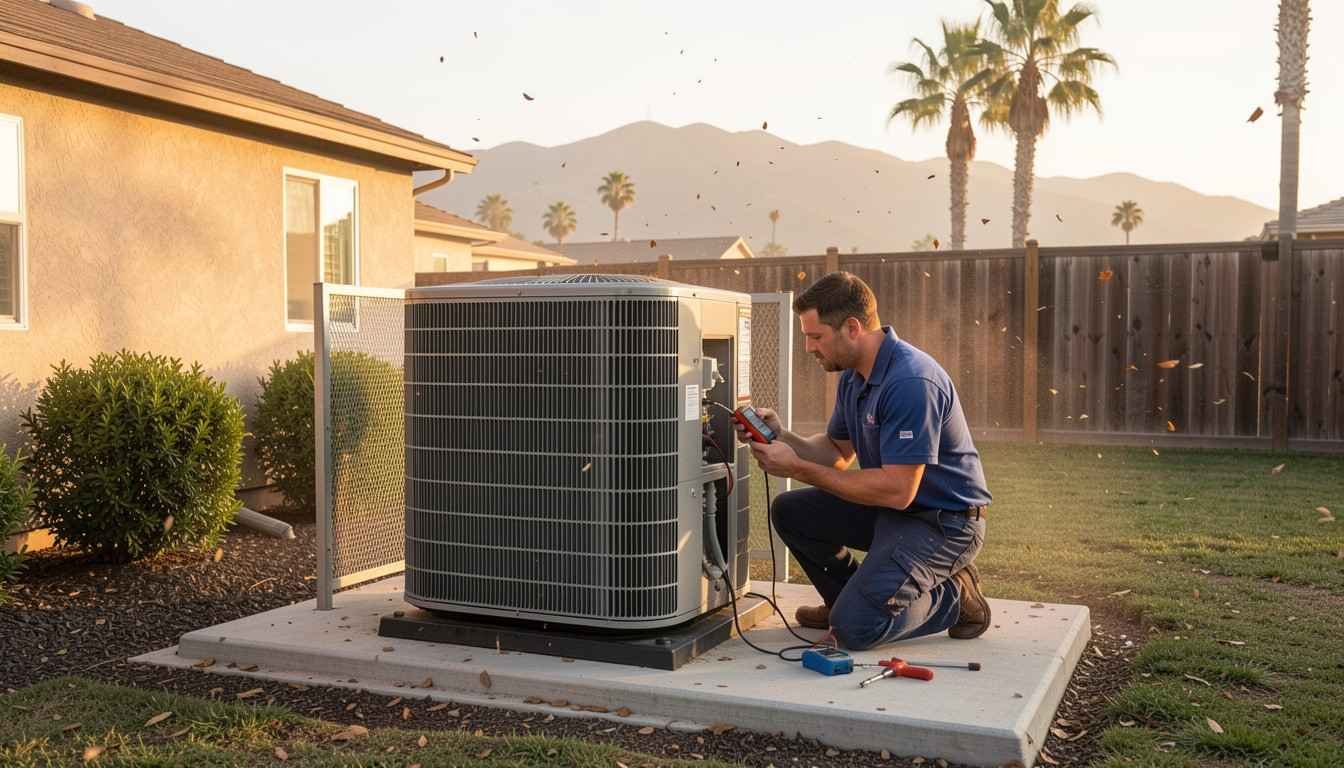
If you live or work in Lake Elsinore, you know the drill. The forecast mentions “Santa Ana winds,” and you brace yourself for hot, dry air, dust everywhere, and alerts about fire danger and possible power shutoffs. What many people do not see is what those same winds do to their HVAC systems.
Santa Ana events push your heating and cooling equipment hard. They clog outdoor units with dust, overload filters, dry out building seals, and sometimes coincide with voltage dips and power outages. If you ignore this, your AC or heat pump will struggle, your indoor air quality will drop, and your repair bills will rise.
As a local appliance repair company that also handles HVAC repair, Appliance Repair Lake Elsinore sees this pattern every season. The good news is that you can treat each Santa Ana period as a planned “stress test” and prepare your HVAC system to pass it.
Why Santa Ana Winds Are Hard On HVAC Systems
Santa Ana winds are strong, dry winds that blow from inland high‑pressure areas toward the coast. They warm up as they move downhill and can reach high speeds. For Lake Elsinore properties, that means:
- Higher outdoor temperatures
- Very low humidity
- Strong gusts that kick up dust, sand, and debris
All of this affects HVAC systems.
Hot, dry, and windy conditions:
- Make it harder for your outdoor condenser to reject heat
- Increase air leaks in buildings, which drives up cooling or heating load
- Push more dust and particles into your system and filters
On top of that, utilities sometimes use Public Safety Power Shutoffs during extreme wind events to reduce fire risk. So your system faces both mechanical stress and electrical risk during the same period.
If you have read our deep dive on how Lake Elsinore’s climate shortens appliance life, you can think of Santa Ana winds as “climate stress on turbo mode” for your HVAC system.
How Santa Ana Winds Damage Residential And Commercial HVAC
Santa Ana winds attack your system in several ways at once.
Dust, Sand, And Debris
Your outdoor condenser or heat pump pulls in huge amounts of air across its coil. During a windy event, that air carries:
- Dust and fine sand
- Leaves, plastic, and trash
- Small branches and other debris
Dust and sand lodge in the fins of the coil and form a layer that blocks heat transfer. The system must run longer and harder to deliver the same comfort. Larger debris can:
- Block airflow completely
- Bend fins
- Jam fan blades
Over time, this means higher energy use and a shorter compressor life.
Filter Overload And Indoor Air Quality
Inside, your HVAC filter catches airborne particles before they reach the coil and ducts. During Santa Ana winds and wildfire smoke, the load on that filter skyrockets.
Filters clog faster, which:
- Reduces airflow
- Makes your blower motor work harder
- Increases the chance of coil icing in cooling mode
- Reduces overall comfort and air quality
In commercial buildings with long run times and more people, the effect is even stronger.
Mechanical Damage From Wind
Strong gusts can:
- Shift poorly anchored outdoor units on their pads
- Bend fan blades
- Loosen wiring
- Damage refrigerant line sets
Even a small shift can strain copper lines and lead to slow leaks. You might not see the problem immediately, but you will feel it as weaker performance and higher bills later.
“My AC Cannot Keep Up”
During extreme hot, windy days, many people feel their AC “cannot keep up” even if it is working correctly. The reasons are:
- Very high outdoor temperatures reduce the temperature difference your condenser needs to shed heat
- Low humidity and high wind increase heat gain through leaks in the building envelope
- Constant infiltration of hot, dry air overworks the system
Your job is to separate “normal struggle under extreme conditions” from “something is actually wrong.” A prepared system will still work hard, but it should not short‑cycle, freeze up, or make alarming noises.
Pre‑Season Checklist: Get Your HVAC Ready Before Santa Ana Season
A little preparation before peak wind periods saves money and headaches.
Schedule A Professional Inspection
You should book a pre‑season check where a qualified technician:
- Inspects and cleans outdoor coils
- Tests capacitors and contactors
- Verifies refrigerant levels
- Checks electrical connections and safeties
This makes sure your system starts the season in top shape rather than limping into a high‑stress period. Appliance Repair Lake Elsinore can include this in a regular HVAC maintenance plan so you are not scrambling when the first wind alert hits.
Clean Outdoor Condensers And Heat Pumps
Even if you have had recent service, you can:
- Turn off power to the outdoor unit
- Gently rinse the coil from the outside with a hose (no high‑pressure nozzle)
- Clear away leaves, trash, and weeds from around the unit
This gives the system a clean coil to start, which makes it more resilient when dust becomes heavy.
Check Ductwork And Building Seals
Santa Ana winds find every crack and gap. You should:
- Inspect weatherstripping around doors and windows
- Seal obvious gaps with caulk or foam
- Consider a duct inspection to find leaks that pull in hot, dusty air from attics or crawlspaces
Tightening your building envelope matters for both comfort and indoor air quality. This step fits well with the broader strategies you use to help your appliances and HVAC handle Lake Elsinore’s climate.
Review Thermostat Settings
In peak conditions, setting your thermostat unrealistically low can cause constant operation without much gain. You should:
- Choose a reasonable cooling setpoint (often 74–78°F)
- Use programmable schedules or smart thermostats to pre‑cool before the hottest hours
- Avoid wide swings that force your system to work extra hard
This strategy is important for both homes and commercial buildings.
Filter Strategy For Santa Ana Winds And Smoke
Your filter is your first line of defense, but you must use it correctly.
How Often To Change Filters
During normal operation, you might change filters every 2–3 months. During Santa Ana wind periods, that schedule accelerates.
Signs you need to change more often:
- Filter looks dark or clogged after a few weeks
- You notice reduced airflow at vents
- Your system runs longer and feels weaker
During heavy dust or smoke, changing filters every 2–4 weeks is common, especially if you have allergies or run the system for long hours.
Choosing Filter Ratings
Filter ratings use the MERV scale. For many homes, MERV 8 or 11 is standard. For better particle capture, especially smoke and fine dust, MERV 13 or specialized smoke‑rated filters can help.
However, higher MERV filters:
- Are more restrictive
- Require a system that can handle the extra resistance
If your system is not sized for high‑MERV filters, forcing them in can reduce airflow too much and cause other problems. It is smart to talk with an HVAC pro about the best filter choice for your specific system.
Air Quality vs Airflow
You must balance:
- Air quality needs (allergies, asthma, sensitive occupants)
- Airflow needs (keeping the equipment healthy and efficient)
In some cases, the best approach is:
- A moderate MERV filter in the main system
- Additional portable HEPA units in key rooms for fine particle control
This balance is especially important in commercial spaces with many people and long operating hours.
Protecting The Outdoor Unit From Wind And Debris
Your outdoor unit faces the full force of the Santa Ana winds, so a few physical steps help a lot.
Keep A Clear Zone
You should maintain a clear area around your condenser or heat pump:
- At least 2 feet of clearance on all sides
- No loose items that can blow into the coil
- No mulch or gravel that can easily become airborne and lodge in fins
Trim shrubs and remove clutter before wind season so nothing becomes a projectile.
Anchor Units Properly
Outdoor units should be:
- Firmly bolted to a pad
- Level and stable
If your unit rocks when you push it, or if it is sitting loosely on cracked concrete, strong wind can shift it. That can stress refrigerant lines and wiring.
Use Covers And Screens Carefully
You may consider:
- Light mesh guards that block larger debris while allowing airflow
- Wind screens or fencing that deflects gusts without enclosing the unit
Avoid wrapping your unit in a solid cover while it runs. Solid covers block airflow and can quickly damage the system. If you use a full cover in the off‑season, remove it before you operate the unit.
Post‑Event Visual Checks
After a strong wind event, walk around your property and check:
- Is the unit still level and firmly attached?
- Are the fins clogged with debris or visibly bent in areas?
- Do you hear any unusual vibrations or scraping sounds when it runs?
- Do you see oil stains under or around the unit, which can indicate a refrigerant leak?
If you notice anything concerning, call a professional before the next heat wave amplifies the damage. If you are still choosing a provider, you can use our guide on finding reliable appliance repair in Riverside County to vet your options.
Operating Your HVAC Smartly During Santa Ana Events
How you run your system during the event matters almost as much as how you maintain it.
Adjust Setpoints
You can reduce strain by:
- Raising your cooling setpoint a degree or two during the hottest hours
- Cooling earlier in the day so your system is not playing catch‑up in the worst conditions
This is also important in commercial buildings where occupant comfort, equipment heat, and large glass surfaces add load.
Use Pre‑Cooling And Zoning
If you have:
- A programmable thermostat
- Zoning dampers
- Mini‑splits in certain areas
you can:
- Cool key rooms or zones more ahead of time
- Close off less critical zones during peak heat and wind
- Focus comfort where people actually are rather than the whole building
Control Fresh Air Intakes
During heavy dust or smoke, you should:
- Use “recirculate” mode instead of bringing in extra outdoor air
- Temporarily close or reduce outdoor air intakes where possible
Commercial systems must still meet ventilation requirements, but temporary adjustments during severe events can protect occupants and equipment. Supplemental air cleaning can help compensate during those periods.
Coordinate With Power Shutoff Plans
Because Santa Ana winds often coincide with planned or possible power shutoffs, you should link your HVAC plan to your outage plan. If you already follow our guide on protecting appliances during storms and power outages, extend those steps to cover wind‑driven shutoffs too.
That means:
- Pre‑cooling the building if you expect a shutoff
- Turning systems off just before the shutoff to avoid hard stops and surges
- Bringing systems back online in stages after power returns
Santa Ana Winds, Wildfire Smoke, And Indoor Air Quality
Santa Ana winds often link with wildfire season. Smoke brings very fine particles that standard filters struggle to stop completely.
Limits Of Standard Filters
Even a MERV 13 filter has limits against very small smoke particles. You can improve capture, but you cannot guarantee complete removal with standard HVAC filters alone.
Using Supplemental Air Cleaning
You can improve indoor air quality by:
- Adding portable HEPA units to bedrooms, living rooms, or critical office spaces
- Creating “clean rooms” in homes where sensitive people spend most of their time
- Creating “clean zones” in commercial spaces, such as conference rooms or wellness areas
These units work with your HVAC system rather than instead of it.
Integrating With Other Local Stress Factors
Santa Ana winds are one part of the broader stress Lake Elsinore properties face. Hard water, heat, and power issues also strain your systems. If you are working on hard water solutions and climate‑related protection, you can fold your Santa Ana strategy into that same framework.
Power Outages During Santa Ana Winds: Protecting Your HVAC
High winds increase outage risk. Your HVAC system does not like sudden loss or return of power, especially under high load.
You should:
- Turn your HVAC system off at the thermostat if you know a planned shutoff is minutes away
- Leave it off during the outage
- After power returns, wait a few minutes, then restart the system
- Listen for any odd noises, hard starts, or breaker trips
Whole‑home surge protection and brownout protection add a strong layer of defense for compressors and control boards. These are the same tools we recommend in our outage protection guide, and they apply just as much in wind‑driven shutoffs as in regular storms.
Creating A Santa Ana Wind Action Plan For Your Property
Instead of reacting to each event, create a simple plan.
For Homes
Your checklist might include:
- Pre‑season maintenance with coil cleaning and system testing
- A plan to change filters more often during dust and smoke periods
- Weatherstripping and sealing around doors and windows
- Simple rules for thermostat settings and pre‑cooling
For Commercial Buildings
Your checklist might include:
- Scheduled inspections for rooftop units and air handlers
- A filter rotation schedule that accounts for peak wind months
- IAQ policies for smoke days, including use of HEPA units
- Staff training on what to do before, during, and after wind and outage events
Annual Planning
You can place this on a yearly calendar:
- Schedule HVAC maintenance before typical Santa Ana periods
- Combine that with checks for hard water scale, appliance performance, and any needed upgrades
- Review your energy strategy and see if any improvements qualify for local rebates
If you plan significant HVAC or electrical upgrades, it is worth checking current incentives in our energy rebates guide. In some cases, you can improve resilience and efficiency at the same time with help from rebates.
Appliance Repair Lake Elsinore can help you build this into your normal service rhythm so it feels like a routine check instead of a crisis fix. If you are still choosing who should work on your systems, you can review our 2026 hiring guide to make a confident choice.
Conclusion: Treat Every Santa Ana Event As An HVAC Stress Test
You cannot stop the Santa Ana winds, but you can decide how your HVAC system and your building handle them.
When you:
- Start with clean, tuned equipment
- Protect your outdoor units and filters
- Run your system wisely under extreme conditions
- Link your wind plan to your outage, climate, water, and upgrade strategies
you reduce breakdowns, improve indoor comfort, and extend the life of your heating and cooling equipment.
If your system already struggles every time the winds blow, or if you want a clear plan before the next event, Appliance Repair Lake Elsinore is ready to help. You can reach out through the contact page to schedule a visit and turn Santa Ana winds from a constant threat into a manageable part of your yearly maintenance.