Power outages used to feel rare. Now they feel like another line item on your yearly calendar. In Lake Elsinore and across Riverside County, you see high wind warnings, severe storms, and Public Safety Power Shutoffs more often than you would like. Every time the lights flicker, you worry about your refrigerator, HVAC system, computers, and point‑of‑sale equipment.
If you handle outages the wrong way, you can lose thousands of dollars in spoiled food, fried control boards, and lost business hours. If you handle them the right way, you protect your appliances, keep your home or business safe, and get back to normal faster.
In this guide, you will learn exactly how power outages damage appliances, what to do before, during, and after a storm, and which protections actually work in 2026 for both residential and commercial properties. As a local appliance repair company and HVAC repair specialist, Appliance Repair Lake Elsinore sees the damage firsthand, so this guide comes from real service calls in this area.
Why Power Outages Are Increasing In Riverside County
You already feel it in your daily life, but the data backs it up. Utility companies have increased intentional shutoffs during extreme winds to reduce fire risk, and winter storms have brought more flooding and downed lines. As a result, Riverside County sees more short outages, rolling blackouts, and brownouts than it did a few years ago.
For a homeowner, this means more stress on refrigerators, freezers, washers, dryers, and central air conditioning systems. For a business, it means risk for walk‑in coolers, ice machines, HVAC rooftop units, and all your electronics that keep operations going.
There is also a hidden cost. Many failures do not happen during the outage itself. They show up weeks later as weak compressors, glitchy boards, or motors that now run hotter than they should. You might not tie that failure back to the storm, but the stress started there.
If you want more context on how local heat, dust, and hard water affect your equipment even on normal days, you can also read our in‑depth guide on how Lake Elsinore’s climate shortens appliance life and how to stop it.
How Power Outages Actually Damage Appliances
A simple “lights out” moment is not the full story. Several different electrical events can hurt your equipment in different ways.
An outage is a full loss of power. A surge is a sharp spike in voltage. A brownout is a drop in voltage that sits below the safe operating range. Your appliances handle a normal fluctuation in voltage, but they do not handle surges or long brownouts well.
When voltage drops, electric motors in your fridge, AC, and commercial coolers still try to run. They draw more current to produce the same work. This extra current creates heat inside motor windings. Over time, that heat breaks down insulation and shortens motor life.
The most dangerous moment often comes when power returns. The grid sends power back, and voltage can spike for a brief period. That surge can jump across sensitive circuits in control boards, Wi‑Fi modules, and power supplies in modern “smart” appliances. One spike can take out a central AC board or the control panel on a high‑end range.
Once you understand that pattern, your goal becomes clear. You want to shield your appliances from both low‑voltage operation and sudden surges.
Immediate Steps During A Storm Or Outage
You cannot control the storm, but you can control how your home or business reacts. A simple checklist makes a big difference.
Before The Lights Go Out
If you receive a storm or high wind warning, you should prepare your appliances the same way you prepare your emergency kit.
You should:
- Fully charge phones, laptops, and any battery‑powered lights.
- Lower the temperature in refrigerators and freezers a few hours before the storm. Colder food stays safe longer.
- Turn down the thermostat a couple of degrees so the building starts cooler.
- Identify which appliances you would unplug if the forecast looks severe, such as expensive electronics and nonessential gear.
If you have a generator or battery backup system, test it ahead of time. Make sure it starts, has fuel or charge, and connects properly to the circuits you plan to protect.
During The Outage
Once the power goes out, stay calm and move through a simple process.
First, turn off or unplug sensitive electronics and nonessential equipment. This includes TVs, computers, gaming consoles, servers without UPS systems, and complex “smart” appliances. You want these devices disconnected when power returns.
Second, leave one small light or lamp switched on. This gives you an instant visual sign that power is back without walking around to test outlets.
Third, protect cold storage. Keep refrigerator and freezer doors closed. A full freezer can keep food frozen for about 48 hours if you do not open the door. A refrigerator stays cold for about 4 hours. If you have commercial equipment, use a thermometer to track temperatures and log them for food safety.
If you use a portable generator, never run it indoors or in a garage. Position it outside with proper ventilation to avoid carbon monoxide poisoning. Plug only essential items into it using heavy‑duty outdoor‑rated cords.
After Power Returns
The moment power comes back on is where many mistakes happen. Do not flip everything on at once.
You should:
- Wait a few minutes to let voltage stabilize.
- Turn on large loads one at a time. Start with lights, then refrigerators, then HVAC systems.
- Listen for unusual sounds from compressors or blower motors, such as loud humming or hard starting.
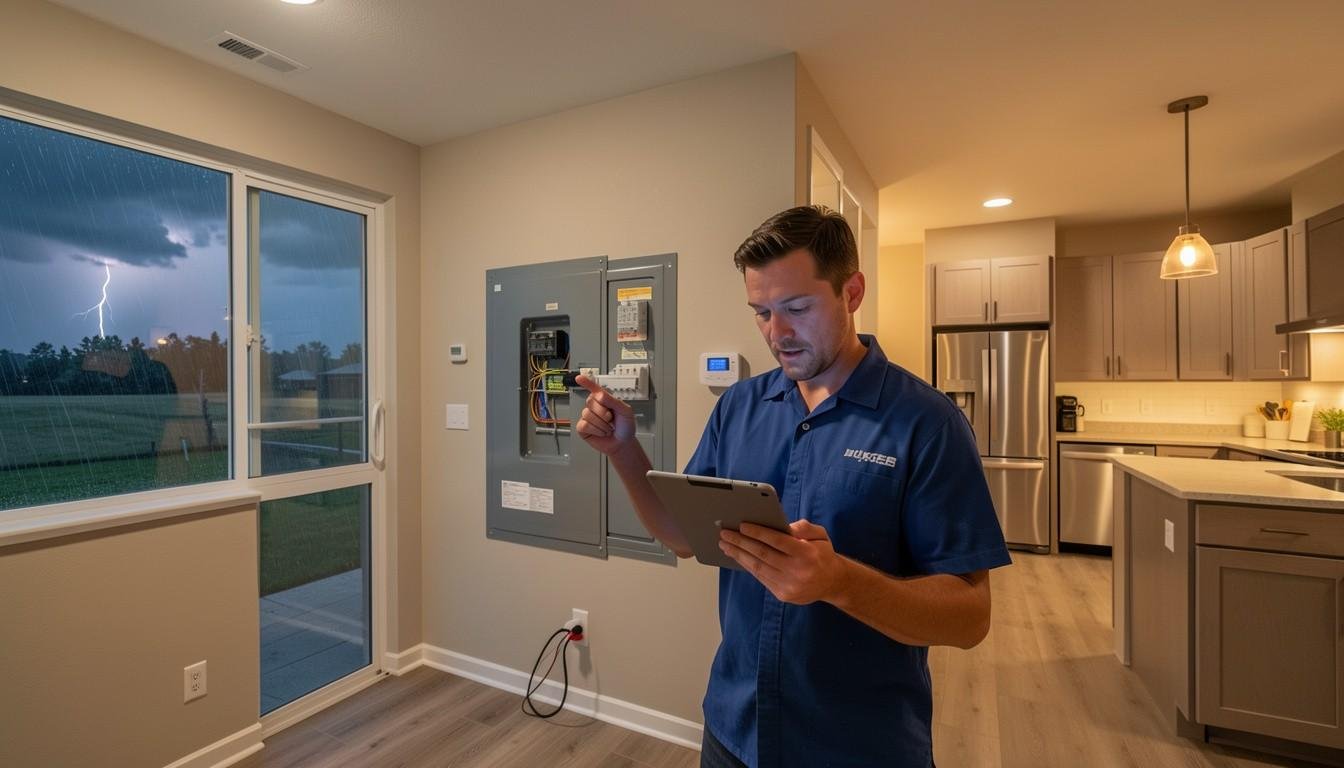
- Check your breaker panel for tripped breakers, which can signal a surge or fault.
If any major appliance does not start correctly, avoid repeatedly trying to restart it. Call a professional so you do not cause further damage. Appliance Repair Lake Elsinore can inspect both home appliances and HVAC units that took a hit during a recent storm.
If you want help checking a unit that already seems stressed by heat, hard starts, or past outages, you can learn more about finding reliable appliance repair in Riverside County before you choose a service provider.
Surge Protection 101: Layered Defense For Home And Business
Surge protection works best as a layered system. You do not choose between a whole‑home device and surge strips. You use both in different roles.
A whole‑home surge protector installs at your main electrical panel. It intercepts large surges entering from the utility line before they spread through your circuits. This protects heavy equipment like HVAC condensers, ovens, built‑in microwaves, hard‑wired dishwashers, and commercial refrigeration.
When you consider cost, a quality whole‑home surge protector often costs less than the board replacement on a single high‑end appliance. That makes the decision simple for many Lake Elsinore properties.
Plug‑in surge strips still matter. They provide fine protection at the point of use for computers, TVs, networking hardware, and point‑of‑sale systems. Look for strips with a clear Joule rating, UL listing, and indicator lights that show when the protection is spent. Once the light says protection is gone, treat the strip as a plain power bar and replace it.
In 2026, you also see more devices like panel‑mounted surge breakers and smart surge outlets in new construction. If you are planning an electrical panel upgrade, you can ask your electrician about adding surge protection at the same time. This ties in nicely with long‑term planning for your appliances and HVAC systems.
Some of these upgrades can also line up with current incentive programs. If you want to see where outage‑ready improvements overlap with rebates, you can review our guide to top energy rebates for Lake Elsinore homeowners in 2026.
Brownouts: The Silent Appliance Killer In Lake Elsinore
You might notice your lights dim without losing power. That is a brownout. It feels less dramatic than a full blackout, but it is often more harmful for motors and electronics.
During a brownout, the voltage drops, but your equipment still tries to run. Motors draw extra current, which causes overheating. Your AC compressor may stall and hum without turning properly. Your fridge may run for longer cycles, heating its windings.
You can protect your equipment from brownouts by using voltage monitoring devices. Some HVAC systems and commercial refrigeration units include built‑in low‑voltage protection. If voltage falls below a safe threshold, these devices shut the system down until power stabilizes.
You can also install external under‑voltage disconnects or line conditioners for sensitive equipment. This is especially helpful for small businesses that rely on critical equipment like walk‑in coolers or server racks. These devices cut power when voltage drops too low and automatically restore power when it returns to a safe range.
For residential use, if you notice frequent dimming lights or humming appliances, you should have a professional evaluate your electrical system and your HVAC equipment. It might indicate a local wiring issue or repeated brownouts on your line.
Generators, Interlocks, And Transfer Switches: Doing Backup Power The Right Way
Backup power gives you control during outages. However, it must be done safely.
Portable generators are common for homes and small businesses. Standby generators with automatic transfer switches serve larger properties or sites that need constant uptime.
Backfeeding through a dryer outlet or any improvised method is dangerous and illegal. It can send power back on utility lines and put line workers at risk. It can also damage your generator and your electrical system.
The safe way to connect a generator is through a transfer switch or a generator interlock kit that meets electrical code. A transfer switch isolates specific circuits that your generator will power. An interlock kit connects the generator to your main panel while mechanically preventing the main breaker and generator breaker from being on at the same time.
Sizing a generator starts with listing your critical loads:
- Refrigerators and freezers
- HVAC or at least a smaller mini‑split or window unit
- Well pumps or sump pumps if you have them
- Networking equipment and key electronics
- For businesses, point‑of‑sale, security systems, and key lighting
You then add up the running watts and factor in starting surges for compressors and motors. A licensed electrician or an experienced appliance and HVAC repair company can help you size and plan this correctly.
If you run HVAC equipment on a generator, you must ensure proper surge protection and voltage quality. Poor generator power can damage sensitive boards the same way a grid surge can.
Protecting Commercial Equipment During Storms
If you run a restaurant, convenience store, office, or small warehouse, power outages bring added pressure. You have health codes, customers, and inventory at stake.
For food businesses, your walk‑in coolers and freezers are your lifeline. During an outage, you should keep doors shut and use thermometers with data logging to track temperatures. If temperatures rise above safe limits, you need a clear policy on what to discard. This protects your customers and your liability.
You should also train staff on a simple outage protocol:
- Who checks the breakers and who calls the utility
- Who logs temperatures in coolers and freezers
- Which appliances must stay off until a manager confirms power stability
- How to restart equipment in the correct sequence to avoid overloading circuits
Some California facilities are moving to microgrids and battery storage to handle outages. While that may not fit every small business budget, smaller battery systems for point‑of‑sale equipment and security systems are more common. They let you keep transacting or at least secure your premises while the power issue resolves.
A commercial HVAC failure after a storm can shut down your building even if the power is back. This is why regular maintenance and surge protection are essential for rooftop units. It is cheaper to keep them healthy than to replace them under pressure.
Long‑Term Resilience Plan For Lake Elsinore Properties
You do not need to fear every storm if you take a long‑term approach.
Start with your electrical panel. Many older homes and buildings still run on undersized or outdated panels. Upgrading the panel gives you safer breakers, room for whole‑home surge protection, and capacity for future loads like EV chargers or mini‑splits.
Next, schedule annual inspections for both your electrical system and your HVAC equipment before the wind and storm seasons. You want connections tight, capacitors strong, and motors in good condition before they face stress from outages and brownouts.
Then, review your outage plan once a year. Check your surge strips, test your generator, confirm your CO detectors work, and walk through your checklist with your family or staff. Small steps now prevent expensive failures later.
If you want expert eyes on your setup, you can reach out to Appliance Repair Lake Elsinore. The same team that keeps your appliances and HVAC systems running day‑to‑day can help you plan for storms and outages as part of a broader maintenance strategy. Many local customers already rely on us for advice on Lake Elsinore’s harsh climate and how it affects equipment, and you can build on that with a dedicated outage‑readiness plan that fits your property type.
If you are still vetting service providers to help with this, you can read our 2026 hiring guide on finding reliable appliance repair in Riverside County so you know what to look for before you let anyone work on your equipment.
Conclusion: Treat Every Storm As A Stress Test For Your Appliances
Every storm and every outage is a test. You can either pass it with a plan or pay for it later in repairs and replacements.
If you prepare before the outage, act smart during it, and restore power in a controlled way, you protect both your home and your business. With proper surge protection, careful generator use, and regular appliance and HVAC maintenance, you turn an unpredictable grid into a manageable risk.
If you have already had an outage that caused issues with your AC, refrigerators, or other appliances, or if you want help building a protection plan before the next storm hits, Appliance Repair Lake Elsinore is ready to help you decide the safest and most cost‑effective next steps. You can reach out through our contact page to schedule an inspection or outage‑readiness visit and get a clear action plan for your property.