You pull a steak out of the freezer and find gray, dry patches across the surface. Now you wonder whether you wrapped it badly or your freezer has a problem. The answer matters. One fix costs a few dollars in supplies, and the other can mean a repair bill.
This guide shows you how to tell the difference. You will learn what freezer burn is, how to run a quick test, which freezer faults cause it, and how Lake Elsinore heat affects your unit. You will also see typical repair costs and learn when to call a pro.
What Is Freezer Burn, and Is It Safe to Eat?
Freezer burn looks alarming, so you may be tempted to throw out good food. Knowing what it is helps you decide what to do with the food and where to look for the cause.
What Freezer Burn Looks Like
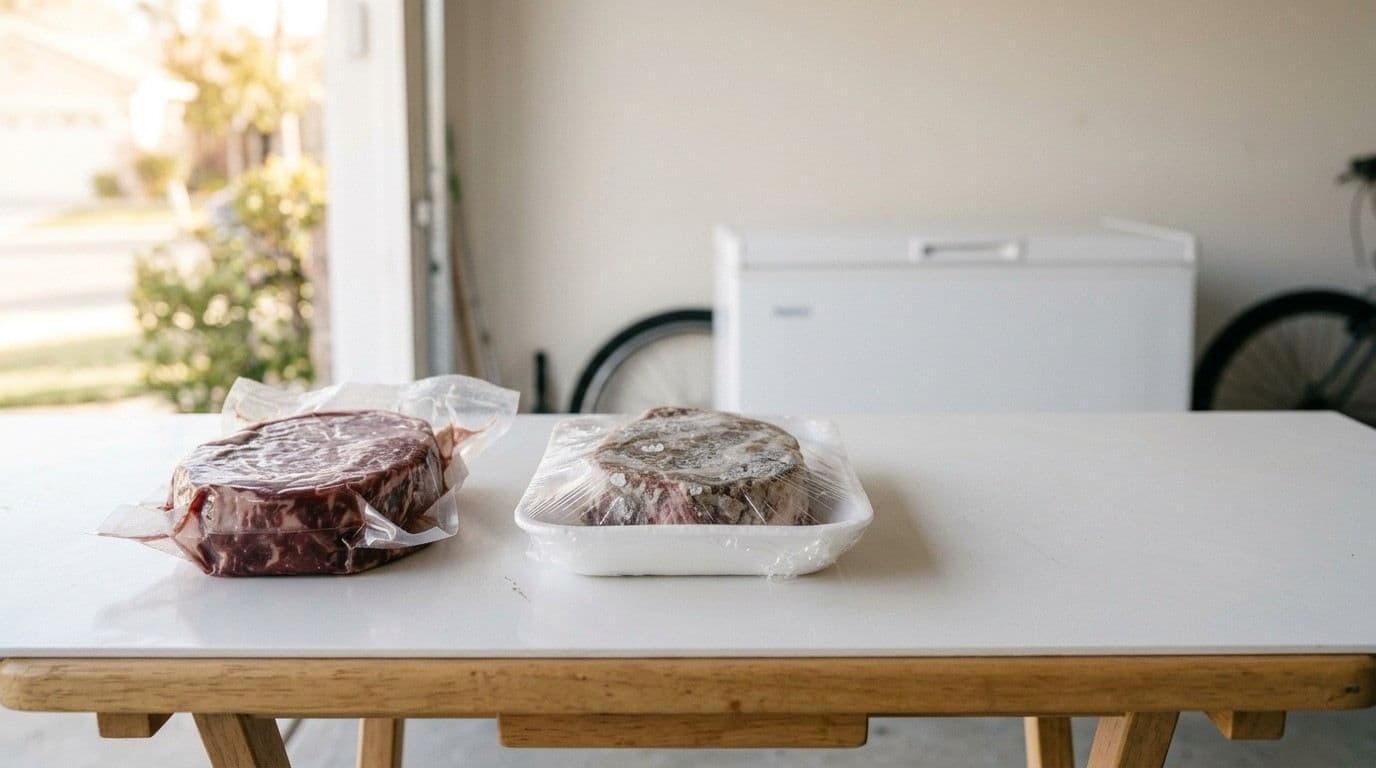
You will see gray or brown dry patches on meat, white frost crystals inside the bag, and shriveled vegetables. Bread and ice cream also develop dry, icy surfaces. These spots feel tough and taste bland.
What’s Happening: Moisture Loss in Plain English
Frozen food still loses water. Ice on the surface turns directly into vapor, and the air around the food carries that vapor away. The surface dries out, and the texture turns leathery. Air contact also dulls color and flavor.
Freezer Burn vs. Spoilage
The USDA states that freezer burn does not make food unsafe. It only leaves the food dry in spots, and food kept constantly at 0°F stays safe. You can cut away the dry areas before or after cooking. Spoilage looks different. Sour smells, slimy texture, or food that thawed and sat warm all mean you should throw it out.
The Quick Answer: Is It Your Freezer or Your Packaging?
You can usually find the cause in a few minutes. Look at where the burn appears, how you wrapped the food, and what the freezer is doing.
Signs It’s Your Packaging
Packaging is the likely cause when only a few items show damage. Burn on store-bought trays, loosely wrapped leftovers, or half-empty bags points to air exposure. Items stored for many months also fall into this group. If your well-sealed items look fine, your freezer is probably working.
Signs It’s Your Freezer
Suspect the freezer when burn shows up on well-wrapped food, or when you see heavy frost on the walls and packages. Soft spots, refrozen drips, and ice crystals on new purchases also point to the unit. Burn on nearly everything means the freezer is the common factor.
60-Second Homeowner Diagnostic Checklist
Run through these checks:
- Place a freezer thermometer inside and read it after several hours. You want 0°F or lower, which is the USDA recommendation.
- Compare a well-sealed item with a loosely wrapped one from the same purchase date.
- Check the door seal for gaps, cracks, or stickiness.
- Look for frost on the walls, the back panel, and the vents.
- Listen for a compressor that runs almost nonstop.
- Note whether the freezer sits in a hot garage or next to a heat source.
If two or more checks fail, your freezer needs attention. If your freezer is the top section of a fridge, our guide to a refrigerator that is not cooling covers shared causes.
How Packaging Causes Freezer Burn
Packaging controls how much air touches your food. Even a perfect freezer cannot protect food in a leaky wrapper.
Why Air Contact Is the Core Problem
Air carries moisture away from the food surface. The more air inside the package, the faster the surface dries. USDA guidance explains that freezer burn comes from air contacting the food. Your goal is to remove air and block new air from entering.
Freezer Bags vs. Vacuum Sealing vs. Freezer Paper vs. Rigid Containers
Each option has strengths:
- Freezer bags: These work well when you press out the air. Thin sandwich bags let air through, so skip them.
- Vacuum sealing: This removes most of the air and works best for meat and fish you plan to store for months.
- Freezer paper: Wrap tightly, fold the edges, and tape the seams. Add a bag for long storage.
- Rigid containers: These suit soups and sauces. Leave a little room for expansion, and fill the container to limit trapped air.
USDA notes that the wrap on store-bought meat lets air through. You can freeze it as is for short periods, but you should overwrap it for long storage.
Common Wrapping Mistakes
Most mistakes are easy to fix. You may leave air pockets, skip sealing the edges, or freeze food while it is still warm. You may also stack unwrapped items on open shelves or reuse torn bags. Fix these first, then check your freezer if the burn continues.
How Your Freezer Causes Freezer Burn
Your freezer controls temperature and humidity. When it swings too much, even good packaging fails over time.
Temperature Swings and the 0°F Standard
The USDA recommends keeping your freezer at 0°F or below and using an appliance thermometer to check it. Warm swings let surface ice melt and refreeze, and that cycle speeds up drying. Stable cold protects quality.
Frost-Free Defrost Cycles vs. Manual-Defrost Freezers
Frost-free freezers warm their coils from time to time to melt frost. Food scientists at the International Union of Food Science and Technology describe how these warm periods push moisture out of food and onto package surfaces.
Manual-defrost freezers skip these cycles, so you may prefer one for long-term storage. You trade convenience for steadier conditions, because you must defrost the unit by hand.
Worn Door Gaskets and Door Openings
A weak gasket lets warm, humid air in. The freezer then works harder and builds frost. Try the dollar bill test: close the door on a bill and tug it. If it slides out easily, the seal is loose. Frequent door openings and long searches for dinner add to the problem.
Signs Your Freezer Is Failing
Packaging fixes only go so far. These symptoms tell you the appliance itself needs help.
Burn on Everything, Even Well-Wrapped Food
When sealed items develop burn while your thermometer reads warm, your freezer is not holding steady temperatures. This is the clearest signal that the cause sits inside the unit. Age can play a part, so check our appliance life expectancy guide to see where your freezer stands.
Heavy Frost, Soft Spots, and Constant Running
Thick frost, soft ice cream, and a compressor that never rests all suggest a fault. A constantly running unit also raises your power bill. Our post on signs your appliances are increasing your electric bill can help you spot the pattern.
Parts Behind the Symptoms (Defrost System, Thermostat, Fan, Coils)
A technician checks several parts:
- Defrost system: A failed heater, timer, or thermostat causes ice buildup.
- Thermostat or sensor: A bad one misreads the temperature.
- Evaporator fan: A weak fan leaves warm pockets.
- Condenser coils: Dirt on the coils makes the compressor work harder.
The Lake Elsinore Factor: Heat and Garage Freezers
Many Lake Elsinore homes keep a spare freezer in the garage, and local summer heat makes that setup harder on the appliance. Heat changes how hard your freezer must work.
How Inland Summer Heat Stresses Freezers
Hot air around the unit forces the compressor to run longer. Longer run times wear parts and raise energy use. You can read more about local effects in our post on how our climate shortens appliance life.
Heat waves also stress the power grid, so plan ahead. The USDA says food may still be safe after an outage if ice crystals remain, and our guide to protecting appliances during power outages explains what to do.
When a Garage Is Too Hot (and “Garage-Ready” Ratings)
Consumer Reports tests freezers at 55°F, 70°F, and 110°F, which shows how much temperature range matters. Check your owner’s manual for the rated ambient range.
If you cannot find it, our guide to finding the model number will help you look up the specs. Keep the unit out of direct sun, and leave space around it for airflow.
How to Prevent Freezer Burn: Packaging and Freezer Fixes
Prevention works best when you fix both sides. Good wrapping and a stable freezer give you the longest quality life.
Wrapping and Sealing Steps That Work
Follow these steps:
- Portion food into meal-sized amounts.
- Cool cooked food quickly before it goes in, as USDA advises.
- Press out air or use a vacuum sealer.
- Seal edges completely and double-wrap long-term items.
- Label each package with the date and contents.
- Use older items first.
The USDA notes that freezing keeps food safe almost indefinitely, so recommended storage times describe quality only. Rotating your stock keeps that quality high.
Setting, Verifying, and Maintaining Your Freezer Temperature
Set the freezer to 0°F and confirm it with a thermometer. Keep it reasonably full, because frozen items help hold the cold. Do not block vents. Vacuum the coils and wipe the gasket on a schedule. Our seasonal appliance maintenance checklist gives you a simple routine.
Freezer Repair Costs in Lake Elsinore: Repair or Replace?
Repair prices vary by part, brand, and labor. The figures below are national averages, so your local quote may differ.
Typical Repair Costs by Problem
Thumbtack reports a national average of $135 to $353 for freezer repair. A simple door gasket fix can run around $69, while a compressor replacement can reach $739 or more. Parts like defrost components and thermostats vary by model, so ask for an itemized quote.
The 50% Rule and When Age Matters
HomeAdvisor advises repairing when the quote costs half or less of a new unit’s price. Age shifts the math, because an older freezer has fewer years left to repay the repair.
Our repair or replace cost-benefit guide walks through the decision. If your freezer is over a decade old, read about repairing appliances more than 10 years old first.
DIY or Call a Pro? What to Do Next
You can handle some checks yourself. Others need training, tools, and safety knowledge.
Safe DIY Checks
You can read the thermometer, clean the coils, test the gasket, level the unit, and defrost a manual model. These steps cost little and often solve minor problems.
When to Book a Lake Elsinore Technician
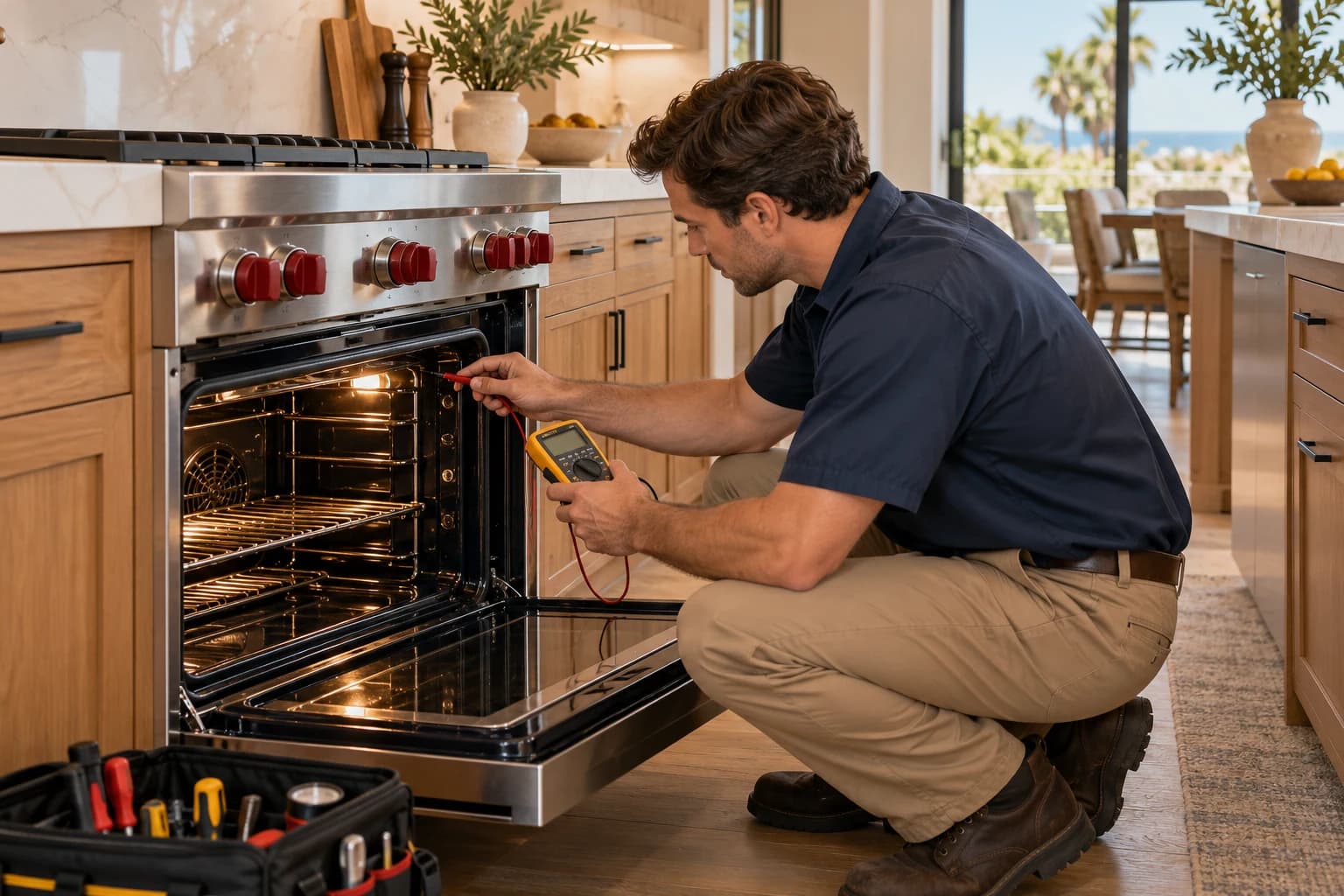
Call a pro when frost keeps returning, the compressor runs nonstop, or the temperature will not hold. Sealed-system and electrical repairs also need a technician. Our post on the hidden costs of DIY appliance repair explains the risks.
If you want a clear diagnosis, Appliance Repair Lake Elsinore can inspect your freezer and tell you what it needs. You can also contact our team to schedule a visit.