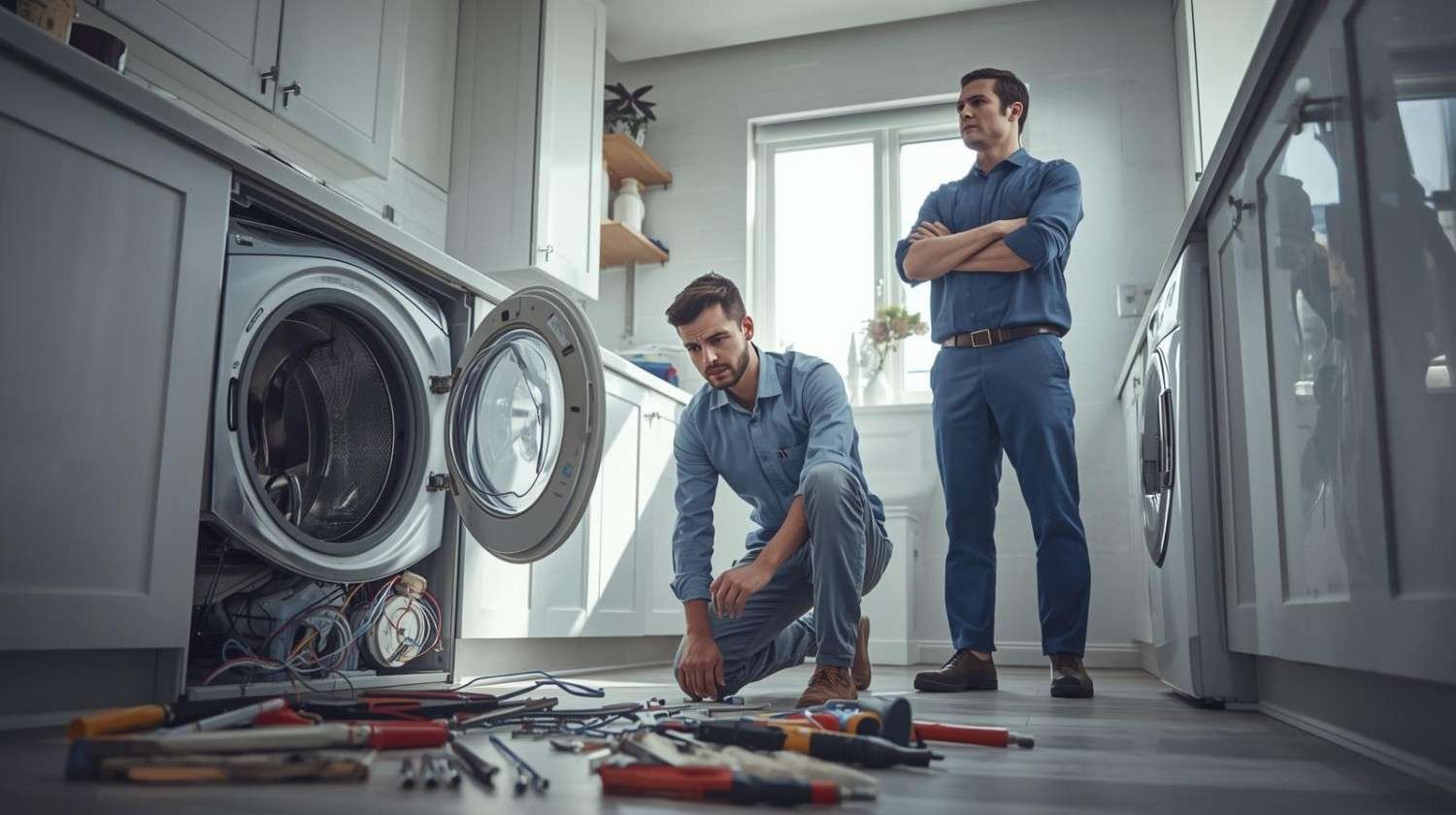
YouTube makes it look easy. A five‑minute video shows someone fixing a washer, replacing a dishwasher pump, or “resetting” a smart fridge with a few taps and a cheap part. You think about the service call fee, grab a screwdriver, and decide to try DIY appliance repair.
Sometimes that story ends well. Other times it ends with extra damage, a voided warranty, and a second call to a professional to fix both the original issue and the DIY attempt. As a home appliance repair and HVAC repair company serving Lake Elsinore, Appliance Repair Lake Elsinore sees the full range of DIY outcomes. This guide walks you through the hidden costs of DIY appliance repair and gives you a clear checklist for when you should call a pro instead.
Why DIY Appliance Repair Is So Tempting In 2026
DIY appliance repair is attractive for a few simple reasons.
You want to save money. A service call feels expensive, especially if the issue seems small. You might feel you can swap a part yourself and keep that money in your pocket.
You have more information than ever. Video tutorials, forums, and step‑by‑step articles give you confidence. Many of them show relatively simple fixes that look safe and quick.
You want control. You like the feeling of solving problems yourself, especially if you already handle basic home projects.
However, modern appliances are more complex than older ones. New models have:
- Smart boards and sensors
- High‑efficiency motors and compressors
- Tighter clearances and more integrated parts
What looks simple from the outside can hide tricky diagnostics and safety risks. That is where hidden costs start to show up.
The Hidden Financial Costs Of DIY Repairs
On paper, DIY looks cheaper. In practice, you face several costs that do not show up in that five‑minute video.
Tool And Parts Costs
Professional technicians already own:
- Multimeters and clamp meters
- Specialty tools for sealed systems and gas connections
- Manufacturer‑specific tools for certain assemblies
As a homeowner or small business owner, you may need to buy:
- Tools you will use once or twice
- Extra parts because you are not sure which one will fix it
- Shipping for multiple orders if you misdiagnose the issue
That can easily eat into any savings you hoped to gain.
Misdiagnosis
A big hidden cost comes from replacing the wrong part. For example:
- You replace a dishwasher pump when the real issue is a clogged or faulty sensor.
- You replace a dryer heating element when the problem is actually a high‑limit thermostat or board.
- You replace a refrigerator thermistor when the root cause is a failing control board or sealed system issue.
You pay for parts, you invest time, and the appliance still does not work. At that point you still need a proper diagnosis from a professional.
Turning A Simple Repair Into A Major Repair
We see this pattern a lot in Lake Elsinore homes and rentals:
- A simple issue, such as a minor leak or loose connection, turns into a bigger problem because a panel was forced, a wire was damaged, or a component was bent.
- A stripped screw, cracked panel, or broken connector adds new parts to the repair list.
Instead of a quick, lower‑cost fix, you now face a larger job that takes more time and money to correct.
If you want to see the opposite story, where careful professional work saved rather than harmed an older appliance, you can read our case study on restoring a vintage O’Keefe & Merritt stove. That job could have gone very wrong in the hands of an untrained DIYer, but it shows the upside of experienced hands.
Warranty, Insurance, And Compliance Risks
DIY repair can also affect your protection if something goes wrong.
Warranty Issues
Many manufacturers state that:
- Warranty coverage depends on proper installation and repair.
- Unauthorized modifications or use of non‑approved parts can void protection.
Opening sealed panels, cutting or bypassing safety features, or installing parts that do not match the original spec can all give manufacturers a reason to deny later warranty claims.
This matters most for:
- Newer appliances still under full or extended warranty
- High‑end and smart appliances with expensive boards
Before you attempt DIY on a newer unit, you should check warranty terms and think carefully about what you might give up.
Insurance And Liability
For landlords, property managers, and business owners, DIY repair carries extra risk.
If unlicensed work:
- Causes a fire
- Leads to water damage
- Contributes to a gas leak or electrical shock
you may face questions from insurers and, in some cases, legal exposure. An insurance company can argue that you did not use qualified help and push back on a claim.
Using a professional for higher‑risk work protects you not just technically, but legally.
Safety Risks You Cannot Ignore
Money and warranties are important, but safety comes first.
Electrical Hazards
Inside most appliances you will find:
- High voltage circuits
- Capacitors that can hold a charge
- Exposed connections once panels are off
DIY errors can lead to:
- Electric shocks
- Short circuits
- Fire hazards from loose or miswired connections
If you do not work with live circuits regularly, it is easy to underestimate these risks.
Gas Appliances
Gas ovens, ranges, and dryers add risks such as:
- Gas leaks from loose fittings
- Misaligned burners and incomplete combustion
- Carbon monoxide risks if venting is compromised
We consider gas appliance repairs beyond basic cleaning and visual checks as “pro only” work. The stakes are too high for guesswork.
Refrigerant And Sealed Systems
Refrigerators, freezers, and many HVAC systems use sealed refrigeration systems. DIY work here can:
- Release refrigerant, which is regulated
- Damage compressors and internal components
- Cause environmental harm
Refrigerant handling has specific rules and requires proper tools. If your DIY plan involves cutting sealed lines or “topping off” refrigerant, you should stop and call a professional instead.
Water Damage And Mold
Washers, dishwashers, and ice makers carry water deep inside cabinets and walls. A small leak after a DIY repair can:
- Damage flooring and cabinetry
- Create mold issues behind appliances
- Lead to more expensive structural repair later
If you see any signs of water around an appliance after your own work, you should shut it down and get help quickly.
The Time And Stress Cost Of DIY Appliance Repair
Time is easy to underestimate.
A “simple” DIY repair often includes:
- Researching the issue online.
- Watching multiple tutorials.
- Finding and ordering the right parts.
- Waiting for delivery.
- Attempting the repair and re‑attempting if it does not work the first time.
If you value your time, especially as a business owner or busy parent, that investment can be significant.
Stress also matters. You may:
- Worry about causing damage.
- Rush because the appliance is critical to daily life.
- Feel pressure if your first attempt fails and the family or staff is waiting.
In many cases, calling a professional who can diagnose and fix the problem in a single visit is less stressful than managing a DIY project stretched over several evenings or weekends.
When DIY Makes Sense: Safe, Low‑Risk Tasks You Can Do Yourself
DIY is not always bad. The key is knowing what is safe and low risk.
Basic Maintenance
You can usually handle:
- Cleaning refrigerator coils and replacing water filters.
- Cleaning dryer lint from the trap and accessible vent sections.
- Running cleaning cycles on washers and dishwashers.
- Cleaning or replacing HVAC filters and simple return grilles.
These steps improve performance and reduce failures without exposing you to live circuits or gas.
If you want to understand how local conditions like heat and hard water stress your appliances, you can see our resources on climate impacts and hard water solutions. They show you how maintenance ties into longer life in Lake Elsinore.
Simple Checks Before Any Service Call
Before you call anyone, you should:
- Make sure the appliance is plugged in.
- Check the breaker panel for tripped breakers.
- Confirm water supply valves are open for washers and dishwashers.
- Make sure doors are fully closing and latches engage.
These checks cost you nothing and often fix simple issues.
Low‑Risk Parts Swaps
Some parts are reasonable for confident DIYers, such as:
- Easy‑access knobs or cosmetic panels.
- Basic refrigerator door seals on some models.
- Simple, plug‑in power cords or hoses with clear instructions.
However, you should still be careful. If you have to reach into live circuits, gas lines, or sealed systems, stop and call a pro.
Clear Red Flags: Situations Where You Should Call A Pro Immediately
There are cases where DIY is not worth the risk.
You should call a professional right away if you see:
- Burning smells, smoke, or visible sparks.
- Repeated breaker trips when an appliance starts.
- Gas odor near a stove, oven, or gas dryer.
- Carbon monoxide alarms near gas appliances.
- Water pouring out of a washer, dishwasher, or water line.
- A refrigerator or freezer that is warm inside while the compressor area runs constantly or makes loud noises.
- Smart appliances with repeated error codes that point to board failures.
In these cases, DIY attempts can make the situation worse or hide dangerous conditions. A qualified technician should find and correct the root cause before you use the appliance again.
DIY vs Pro For Lake Elsinore Homes And Businesses
Lake Elsinore brings some local twists that make careful decisions important.
You have:
- High summer heat that stresses refrigerators, freezers, and AC units.
- Santa Ana winds that push dust into outdoor units and vents.
- Hard water that shortens the life of water‑using appliances.
- Power events and surges that damage boards and motors.
You can see how we approach these issues in our guides on climate, hard water, power outages, and Santa Ana winds. Each one shows how local conditions interact with your equipment.
For homes, this means a borderline DIY repair that might hold for a while in a mild climate could fail quickly here. For businesses and rentals, it means downtime costs and risks to tenants or customers are higher. That is why many commercial clients choose a “no DIY on critical systems” policy and use a local professional for anything beyond basic maintenance.
How Appliance Repair Lake Elsinore Approaches “DIY Gone Wrong” Calls
We handle many service calls where someone already tried to fix the appliance. Our goal is not to make you feel bad. Our goal is to get you back up and running and help you avoid extra cost next time.
A typical visit looks like this:
- We ask what you did and what parts you replaced.
- We inspect for any new damage, such as broken connectors, stripped screws, or miswired components.
- We perform a full diagnostic to find the original issue.
- We give you a clear estimate of what it will take to correct both the original fault and the new problems.
In some cases, the DIY attempt changed our recommendation. For example:
- A simple repair would have made sense originally, but new damage pushes the cost into replacement territory.
- A replacement that looked marginal now makes more sense because the cabinet, wiring, or connectors are compromised.
We will explain that clearly so you can decide whether you want to proceed with repairs or start planning a replacement instead. If you want help comparing options, our guide on deciding whether it is worth repairing an appliance more than 10 years old can give you extra context.
Simple Decision Checklist: Try DIY Or Call A Pro?
You can use this decision tree every time an appliance misbehaves.
- Check safety first.
If you smell gas, see sparks, smell burning, or have major leaks, turn the appliance off, shut off utilities if needed, and call a pro. - Do quick basic checks.
Confirm power, breakers, water supply, and obvious blockages. If that solves it, you are done. - Ask: is this task maintenance or repair?
If it is cleaning, filter changes, or non‑invasive inspection, you can usually proceed yourself. - Check the warranty status.
If the appliance is under warranty or extended coverage, avoid opening panels or doing work that could void coverage. Call the warranty service line or a qualified local company. - Evaluate your skills and tools honestly.
If you do not own the right basic tools or are not comfortable with electrical or gas work, stop at simple tasks. - Think about how critical the appliance is.
If it feeds your family or your business, and downtime is painful, lean more toward calling a pro early. - Consider local stress factors.
If the appliance has already been through years of hard water, heat, or power issues in Lake Elsinore, it may be more fragile than it looks. - Decide and act.
If you choose DIY, stay within low‑risk boundaries and stop if you see new issues. If you choose professional help, gather model numbers, error codes, and a brief description of what you already tried.
Conclusion: Saving Money Without Putting Your Home Or Business At Risk
DIY appliance repair can save money in a few situations, but it also carries hidden costs in tools, time, misdiagnosis, warranties, and safety. The key is knowing where to draw the line.
Use DIY energy on basic maintenance, simple checks, and clear low‑risk tasks. Save the high‑stakes work for qualified technicians who handle electrical, gas, and sealed‑system issues every day. That way you protect your home, your business, and your budget.
If you are in Lake Elsinore or nearby and you are staring at an appliance you already tried to fix, or you are not sure whether your situation is safe for DIY, Appliance Repair Lake Elsinore can help you decide. You can contact our team through the contact page to describe the problem, share what you already did, and schedule a visit. We will give you a clear path forward that respects both your safety and your wallet.