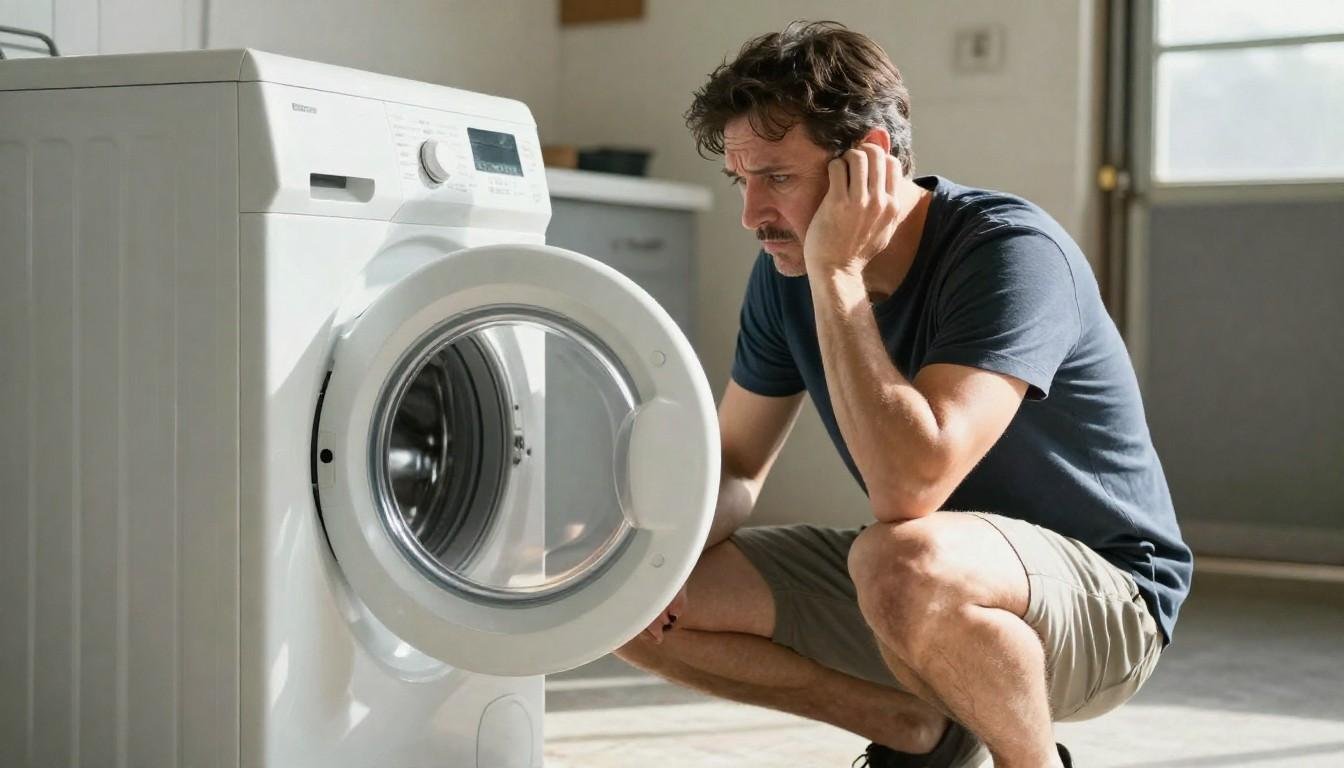
You start a load, walk away, and come back to find your clothes sitting in a puddle of water instead of ready for the dryer. You can hear the motor humming along just fine, so it’s easy to assume the washer is broken beyond repair.
In reality, a washer that runs but won’t spin usually points to one of five specific parts, and most of them are easy to diagnose once you know what to look for. This guide walks you through each one, what it costs to fix, and how to tell when it’s time to call a technician instead of pulling out the toolbox.
Quick Answer: What “Motor Runs But Won’t Spin” Actually Means
This specific symptom narrows things down fast, so it’s worth understanding before you start troubleshooting.
Why This Is a Different Problem Than a Washer That Won’t Start
A washer that won’t start at all usually points to a power or control issue. A washer that runs, fills, and agitates but never spins tells you the motor itself works fine. The problem sits somewhere between the motor and the drum, or in a safety switch that’s blocking the spin cycle on purpose.
The One Sound Test That Narrows Down the Cause
Listen closely during the cycle. A humming or whirring motor with a silent, still drum usually means a mechanical disconnect, like a belt or coupler. Clicking, buzzing, or a motor that cuts in and out suggests an electrical or sensor issue instead.
How to Confirm the Motor Really Is Running
Before you dig into specific parts, make sure what you’re hearing is actually the motor.
Listening and Feeling for Motor Activity Safely
With the washer unplugged and empty, you can sometimes turn the drum by hand to check for resistance. While it’s running, place your hand carefully on the washer’s exterior, away from moving parts, to feel for vibration that matches the sound of the motor.
Common False Alarms (Vibration vs. Actual Spin)
Sometimes a washer vibrates or hums without the drum ever engaging, which can feel like spinning even though nothing is happening. Open the lid partway during a top-load cycle, if it’s safe to do so, and watch the drum directly to confirm it isn’t moving at all.
Reason 1: A Broken or Slipped Drive Belt
The drive belt is one of the most common culprits, and it’s also one of the more affordable fixes on this list.
How the Belt Connects the Motor to the Drum
In belt-driven washers, a rubber belt wraps around a pulley on the motor and another on the transmission or drum assembly. When the belt is intact, the motor’s spin transfers directly to the drum. When it breaks or slips off, the motor keeps turning with nothing to drive.
Signs It’s the Belt (Burning Smell, Agitates But Doesn’t Spin)
A burning rubber smell during the cycle is a strong clue, since a slipping belt creates friction against the pulley. Your washer may still agitate normally during the wash portion but go completely silent on the drum during the spin cycle.
Top-Load vs. Front-Load: Belt Differences
Older top-load washers rely on a belt as a core part of the drive system, so belt failure is common. Front-load washers use belts too, but they tend to be more durable and fail less often, which usually points investigators toward other causes first.
Reason 2: A Worn or Broken Motor Coupler
On direct-drive washers without a belt, the motor coupler often takes the blame instead.
What a Motor Coupler Does (Direct-Drive Washers)
The motor coupler is a small rubber and plastic piece that connects the motor directly to the transmission. It’s a compact part, but it plays a big role in whether power actually reaches the drum.
Why This Part Is Designed to Fail First (And Why That’s a Good Thing)
Manufacturers intentionally build the coupler to be a weak point. If the washer becomes overloaded or jams, the coupler breaks before the motor or transmission takes damage. Replacing a small, inexpensive part is far cheaper than replacing the motor.
How to Spot Coupler Failure vs. Belt Failure
Coupler failure is more common in top-load washers without a visible belt. If you can access the coupler and see cracked or worn rubber, that confirms it. A grinding or rattling noise when the machine tries to spin is also a common sign.
Reason 3: A Faulty Lid Switch or Door Lock
Sometimes the washer isn’t broken at all. It’s simply refusing to spin as a safety measure.
Why Washers Refuse to Spin With an Unlatched Lid or Door
Every washer includes a safety switch that prevents the drum from spinning at high speed unless the lid or door is securely closed. This protects you from injury and keeps water from spraying out mid-cycle.
Top-Load Lid Switch Issues vs. Front-Load Door Lock/Interlock Issues
Top-load washers use a simple lid switch that can wear out or shift out of position over time. Front-load washers use a more complex door lock and interlock system, since the door has to stay sealed throughout the entire cycle.
How Error Codes Can Help Point You in the Right Direction
Many modern washers display an error code when the lid or door switch fails to engage properly. Check your owner’s manual for what your specific model’s codes mean, since these vary by brand and won’t always match what you find in a generic troubleshooting guide.
How to Test a Lid Switch or Door Lock at Home
With the washer unplugged, you can often locate the switch near the lid hinge or door frame and press it manually to check for a clicking response. If it doesn’t click or feels loose, that’s a strong sign it needs replacing.
Reason 4: A Drainage Problem Triggering a Safety Lockout
If your washer is full of water at the end of the cycle, drainage is likely your answer.
Why Washers Won’t Spin With Standing Water Inside
Washers are built to stop the spin cycle if they detect too much water still sitting in the drum. This prevents water from splashing out at high speed and protects the motor from working against a heavy, water-logged load.
Clogged Drain Pump Filter or Kinked Drain Hose
A clogged filter or a bent drain hose stops water from leaving the machine fast enough. This is one of the more common reasons for a spin failure, and it’s also one of the easiest to check yourself.
Our guide on why your washing machine smells like mildew covers the same filter and drainage area, since standing water and odor issues often come from the same root cause.
Failed Water Level (Pressure) Switch
The pressure switch tells the washer’s control board how much water sits in the drum. If this switch fails, the machine may think it’s still full even after draining, and it will refuse to spin as a result.
How to Check and Clear This Yourself
Locate the drain filter, usually behind a small panel at the bottom front of the machine, and clear out any lint or debris. Check the drain hose for kinks or blockages behind the washer as well.
Reason 5: A Failing Control Board, Inverter, or Clutch Assembly
This is the least common cause on this list, but it’s also the most involved to diagnose and repair.
Why Modern Washers Have More Electronic Points of Failure
Newer washers rely on sensors, inverter boards, and control modules to manage spin speed and safety functions. This makes them more efficient, but it also means more components can fail compared to older, purely mechanical designs.
Inverter Board Issues on High-Efficiency and Smart Washers
The inverter board controls motor speed directly. If it sends the wrong signal, or detects an electrical fault, the washer may shut down the spin cycle entirely to protect itself from further damage.
Clutch and Transmission Failure on Older Top-Load Models
Older top-load washers use a clutch assembly to engage the spin cycle. A worn or damaged clutch can prevent the drum from reaching full speed even if the motor runs perfectly.
Why This Is the One Reason You Shouldn’t DIY
Diagnosing and replacing a control board or transmission involves electrical testing and internal disassembly that carries real risk if done incorrectly. This is where the hidden costs of DIY appliance repair really show up, since a wrong guess here can damage additional parts.
What It Costs to Fix in 2026 (Repair Pricing Breakdown)
Knowing the price range for each part helps you set realistic expectations before calling for service.
Drive Belt Replacement Cost
A drive belt replacement is one of the more affordable repairs on this list, with the part itself typically costing a small amount and labor making up the rest of the bill.
Motor Coupler Replacement Cost
Motor couplers are inexpensive parts, but the labor to access and replace them can make up a bigger share of the total cost than the part itself.
Lid Switch or Door Lock Replacement Cost
Lid switches and door locks fall in a similar affordable range, though front-load door lock assemblies with electronic interlocks tend to cost more than a simple top-load lid switch.
Drain Pump and Control Board Repair Costs
Drain pump replacement sits in the middle of the pricing range, while control board and inverter repairs tend to run the highest, given the complexity of the part and the diagnostic time involved.
Repair vs. Replace: When a Non-Spinning Washer Isn’t Worth Fixing
If a control board or transmission repair starts approaching half the cost of a new washer, replacement usually makes more sense, especially on a machine already past its expected lifespan. Our repair or replace cost-benefit analysis walks through how to weigh that decision.
DIY vs. Calling a Professional: Where the Line Is
Some of these fixes are well within reach for a confident homeowner. Others aren’t worth the risk.
Safe DIY Checks Anyone Can Do (Belt Inspection, Lid Switch Test, Load Balance)
Checking the drain filter, testing the lid switch by hand, rebalancing an uneven load, and visually inspecting a belt are all safe, low-risk checks you can do yourself with the washer unplugged.
Repairs That Require Disassembly and Electrical Safety Knowledge
Replacing a motor coupler, clutch assembly, or control board usually requires removing panels and working near electrical components. Without the right tools and experience, this raises the risk of injury or further damage.
Why Guessing Wrong on the Cause Can Damage Other Parts
Replacing the wrong part based on a guess wastes money and time, and in some cases, running a washer with an unresolved mechanical fault can cause damage to nearby components. A proper diagnosis upfront saves you from paying for parts you didn’t actually need.
The Lake Elsinore Factor: Local Conditions That Speed Up These Failures
A few local conditions make these five failures more common here than in other parts of the country.
Hard Water’s Effect on Pumps, Valves, and Sensors
Riverside County’s hard water leaves mineral deposits inside pumps, valves, and pressure switches over time, which can cause the exact drainage and sensor issues covered in Reason 4. Our breakdown of hard water solutions for Lake Elsinore residents covers ways to reduce this buildup.
Garage Laundry Rooms, Heat, and Belt/Rubber Component Wear
Many homes here keep the washer in the garage, where summer heat accelerates wear on rubber belts and couplers. Rubber components naturally degrade faster in high heat, which shortens their expected lifespan compared to a climate-controlled laundry room.
Power Fluctuations and Their Impact on Control Boards
Power surges and fluctuations can damage sensitive control boards and inverter systems over time. If your area experiences frequent outages or voltage swings, a surge protector for your washer is a simple way to add a layer of protection.
Preventing Spin Cycle Failures Before They Start
A few habits go a long way toward keeping these five parts in good shape longer.
Load Size and Balance Habits That Protect the Belt and Coupler
Overloading the drum puts extra strain on the belt and coupler every time the washer tries to spin. Keeping loads balanced and appropriately sized reduces wear on both parts significantly over the life of the machine.
Routine Drain Filter and Hose Maintenance
Cleaning the drain filter every few months and checking the hose for kinks prevents the drainage-related spin failures covered in Reason 4 before they start.
Signs of Early Wear Worth Addressing Before a Full Breakdown
Unusual noises, a burning smell, or a spin cycle that seems slower than usual are all early warning signs. Addressing these early, as part of a seasonal appliance maintenance routine, often costs less than waiting for a full failure.
For Business Owners: Spin Failures in Commercial and Multi-Unit Laundry Equipment
If you manage a laundromat, gym, or rental property, a non-spinning washer isn’t just an inconvenience. It’s lost revenue and unhappy customers.
Why Commercial Washers Wear Out Belts and Couplers Faster
Commercial machines run far more cycles per week than a residential washer, which means belts, couplers, and drain pumps wear out on a much faster timeline and need more frequent inspection.
Downtime Costs for Laundromats, Gyms, and Rental Properties
Every machine sitting out of service represents lost income and frustrated customers looking elsewhere. Fast, accurate diagnosis matters more in a commercial setting, where downtime has a direct financial cost.
Preventive Maintenance Schedules for High-Cycle Machines
Scheduling regular belt, coupler, and drain filter checks on high-use machines catches wear before it turns into a full breakdown, keeping your equipment running and your customers happy.
A washer that runs but won’t spin is almost always traceable to one of these five parts, and most of them are straightforward to diagnose once you know what to check.
If you’ve gone through the safe DIY steps and the problem persists, or if you’re dealing with a control board or transmission issue that’s outside your comfort zone, it’s worth getting a second opinion before the problem gets more expensive.
The team at Appliance Repair Lake Elsinore services washers for homeowners and businesses throughout the area, and you can reach out to us any time you’d rather have a technician confirm the diagnosis than guess.