Roughly 15 to 20 percent of Summerly kitchens include at least one Sub-Zero or Wolf appliance, and a good number pair them with a Viking Professional range or a Bosch Benchmark dishwasher. These are appliances built for a 20-year service life, which is exactly why they deserve an annual service rather than a call when something fails. A $350 maintenance visit on a $12,000 refrigerator is not an indulgence; it is the cheapest thing you will ever do for it.
This guide sets out what each brand needs in a Lake Elsinore kitchen specifically, where the local water and heat change the schedule, and how to organise it into one annual plan. For the housing stock and brand mix in the community, see the Summerly service page.
Why Summerly luxury kitchens need different maintenance
Three things separate a Summerly luxury installation from a standard kitchen, and all three change the maintenance.
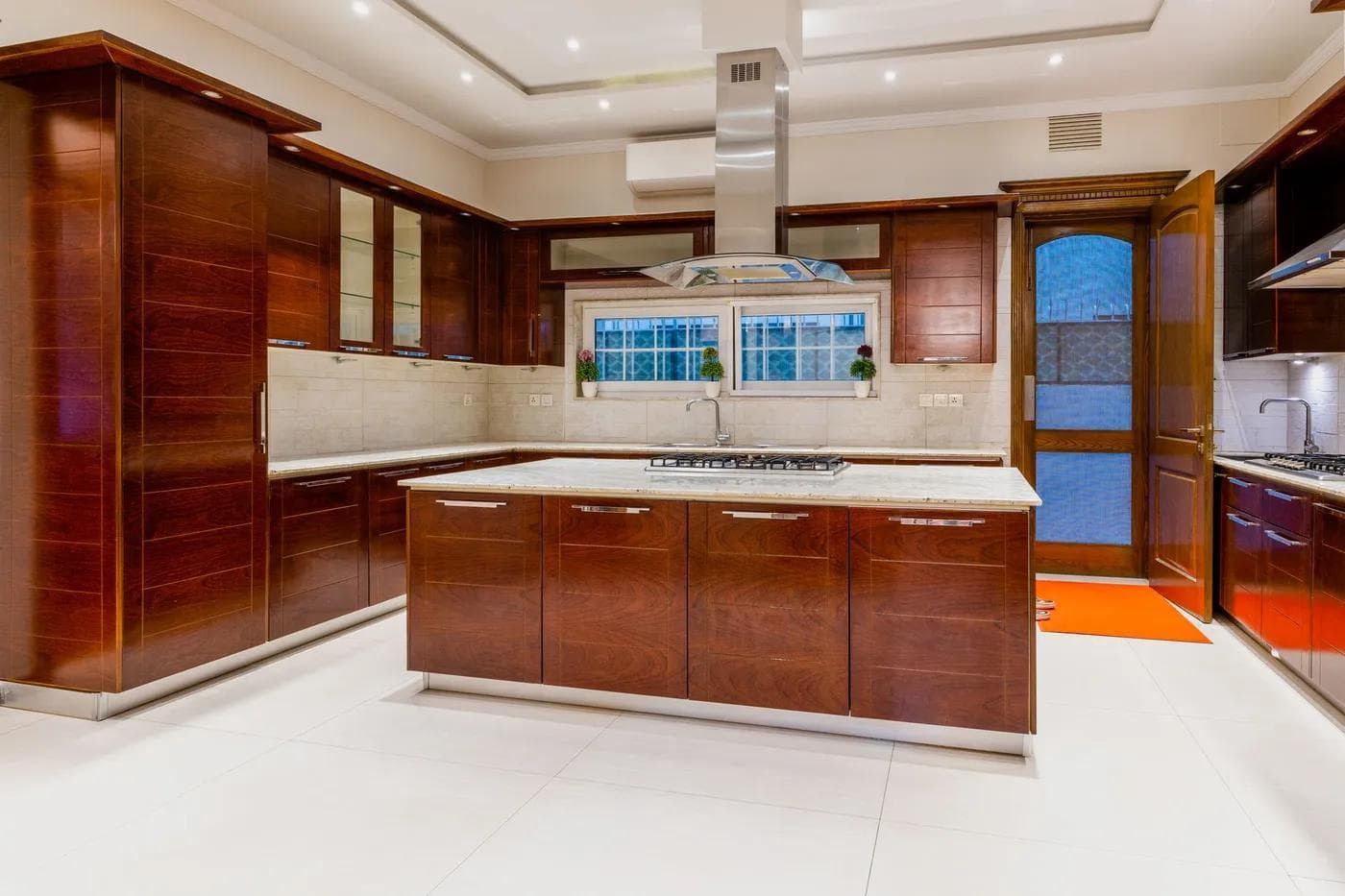
The appliances are built in. A Sub-Zero column or a Wolf wall oven is part of the cabinetry. Ventilation clearance, which a freestanding refrigerator gets automatically, depends on how the cabinet was built. Original construction sometimes leaves insufficient clearance, particularly in older Summerly builds where cabinet designs did not account for Sub-Zero's ventilation requirements, and a built-in running warm because of its cabinet will shorten its compressor life every summer.
The water is hard. EVMWD supply at 135 to 160 ppm scales ice maker lines, dishwasher spray arms, and the precision water systems in steam ovens and coffee machines faster than the manufacturer's maintenance schedule assumes. Those schedules were written for average water. Lake Elsinore is not average.
The replacement cost changes the economics. A built-in Sub-Zero is $8,000 to $16,000 to replace. A Wolf range is $6,000 to $14,000. A Viking Professional range is $5,000 to $12,000. At those numbers, repair makes sense at almost any age under 15 years, and maintenance that delays the first major repair is worth a great deal more than it would be on a $900 standard refrigerator.
The other thing worth saying plainly: these appliances use proprietary diagnostic procedures and authorised parts. A generalist technician who treats a Sub-Zero like a Samsung will misdiagnose it, and aftermarket parts, particularly door gaskets, do not seal to specification. Use a technician who services the brand.
Sub-Zero refrigeration annual service
Sub-Zero uses a dual refrigeration system: separate compressors and evaporators for the refrigerator and freezer sections. That design is why the units last, and it is also why diagnosis requires knowing which system is doing what.
The annual visit covers:
Condenser coil cleaning. Non-negotiable in Lake Elsinore. The condenser sits at the top of most Sub-Zero columns behind the grille, and Santa Ana dust coats it the same way it coats any refrigerator. A dirty condenser raises operating temperature, lengthens compressor run time, and is the most common precursor to a sealed system failure we see on these units. Clean it in spring, before the basin heat arrives.
Ventilation clearance check. We confirm the cabinet allows the airflow the unit needs. If a Summerly installation is running warm because the cabinet grille is undersized or blocked, that gets flagged and remediated, because no amount of coil cleaning fixes a unit that cannot breathe.
Door gasket inspection. Sub-Zero doors are heavier than standard refrigerators and the gaskets seal against tight tolerances. A failing gasket shows as temperature drift, condensation, and higher energy use. Replacement uses authorised Sub-Zero gaskets only.
Ice maker water path. Line, inlet valve, and module, checked in that order. EVMWD water scales the line and corrodes the valve solenoid over years, and catching restriction early is a cleaning rather than a parts cascade. Our hard water guide explains the timeline.
Wine storage temperature verification. For wine columns and drawers, we check the sensors and damper operation across zones. Wine cellar emergencies get same-day priority if something fails, but the point of the annual visit is that it does not.
Pricing context: standard component repairs run $350 to $650, sealed system repairs $850 to $2,500, and the diagnostic is $89 waived with repair, or $135 for built-in units that need extraction. Parts arrive in 3 to 5 business days for standard components and 5 to 10 for sealed system parts. Full details are on the Sub-Zero repair page.
Viking Professional range maintenance
Viking Professional ranges are the signature installation in Summerly's professional-style kitchens, and their maintenance is mostly about ignition and heat.
Burner and igniter cleaning. Each sealed burner on a Professional range has its own igniter module. Food debris and grease on the igniter tip cause the clicking-without-lighting symptom that is the single most common Viking call. An annual clean of the burner caps, ports, and igniter tips prevents most of it. When a module does fail, typically at 8-plus years, replacement is $220 to $400 per module.
Gas valve check. Burners that will not light or will not stay lit after the igniter is ruled out point to a gas valve solenoid, $250 to $450 depending on model. Verifying gas supply and valve operation is part of the annual check.
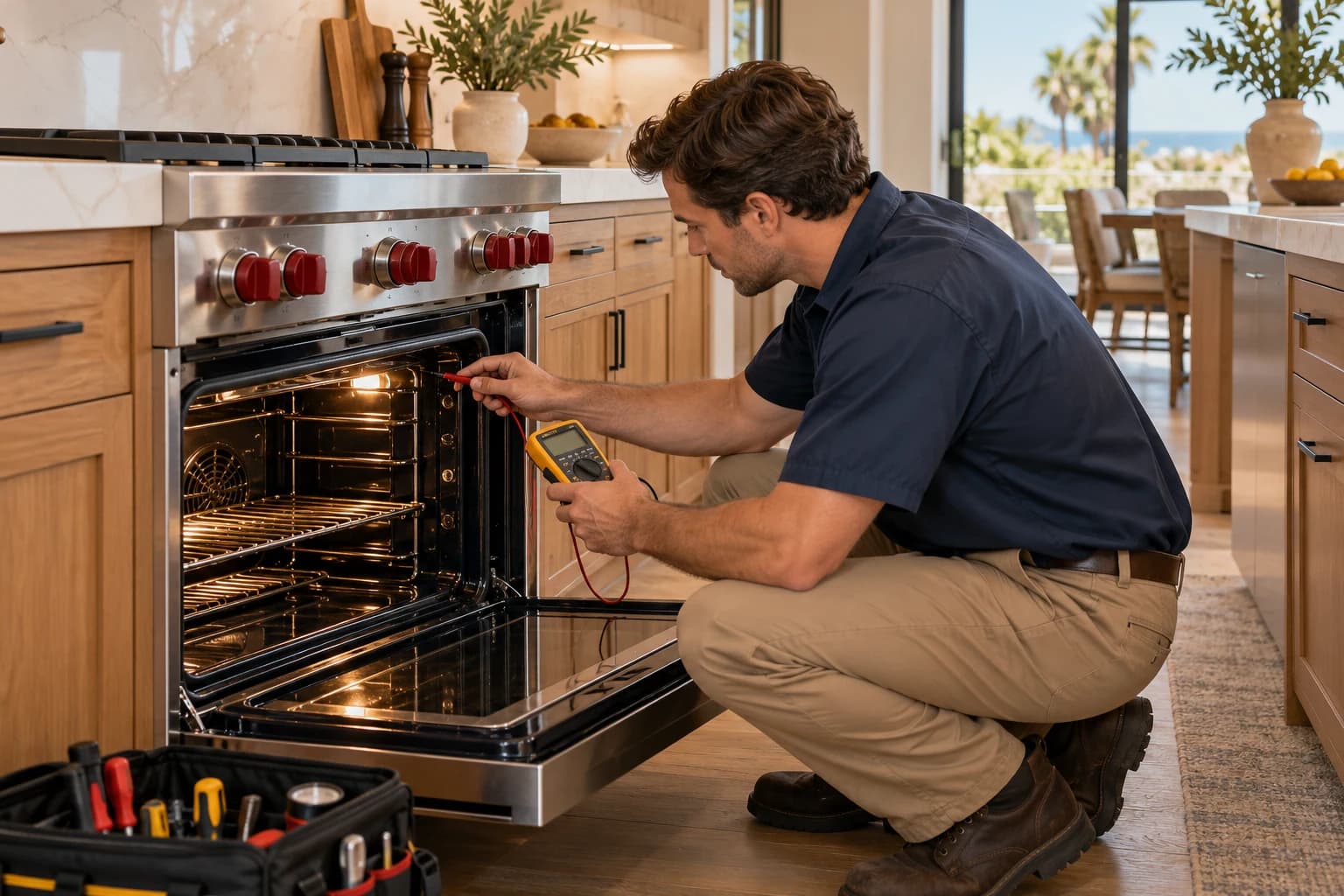
Oven calibration and convection fan. On wall ovens and dual-fuel ranges, we verify oven temperature against the setpoint and listen to the convection fan motor. Uneven baking with a diagnostic code on newer units is usually the convection motor, $350 to $550 to replace.
Control board inspection. Newer Viking ranges run sophisticated control boards that fail from prolonged high-temperature exposure. The annual visit cannot prevent that, but it can confirm the cooling fan behind the control panel is working, which is the thing that protects the board.
Generation check. Viking was acquired by Middleby in 2013. Pre-2013 parts availability is generally good but some legacy items are becoming harder to source; post-2013 is standard. Knowing which generation your range is shapes how far ahead to plan a repair. Standard parts arrive in 3 to 5 business days, less common items 5 to 10. See the Viking repair page for pricing context.
Wolf cooking appliance care
Wolf, part of the Sub-Zero group, is engineered to the same service-life standard, and much of its maintenance overlaps with Viking. Two things are Wolf-specific in Lake Elsinore.
Steam ovens and hard water. Wolf convection steam ovens use precision water dosing through a reservoir and steam generator. EVMWD water at 135 to 160 ppm scales that system faster than the manual assumes. Run the descaling cycle when the oven prompts, and expect the prompts to come more often than they would in a soft-water area. We include descaling as preventive maintenance on these units, because a scaled steam generator is an expensive repair that is entirely avoidable.
Sealed burner igniter modules. Same pattern as Viking: individual modules per burner, clicking without lighting when they fail, common at 8-plus years, $220 to $400 per module. Annual cleaning of the igniter tips and burner ports delays it.
The rest of the Wolf list:
- Gas valve solenoids, $250 to $450.
- Convection fan motors on wall ovens, $350 to $550.
- Control boards on newer ranges and wall ovens, $400 to $850.
- Induction cooktop coils, $500 to $900 per coil. Induction units should have their cooling fan verified annually; a change in the fan's sound is the early warning.
- Warming drawer heating elements, $250 to $450.
Wolf parts come through the Sub-Zero Wolf distributor network, 3 to 5 business days for standard components and 5 to 10 for specific control boards and induction coils. Households with both Sub-Zero refrigeration and Wolf cooking can combine service calls for related maintenance. The Wolf repair page has the full pricing context.
Bosch Benchmark dishwasher maintenance
Bosch Benchmark dishwashers are common in upgraded Summerly kitchens, and they are among the most reliable dishwashers on the market, with a typical service life of 12 to 15-plus years. In Lake Elsinore, keeping them there is mostly about water.
Spray arm scale. Hard water minerals accumulate in the spray arm holes and progressively block the jets. Over two to three years without descaling, cleaning performance drops even though the dishwasher appears to run normally. Pull the arms and hold them to a light; if the holes are visibly restricted, scale is the problem. A citric acid soak clears it, and a $95 professional clean with the diagnostic waived beats the $180 to $350 spray arm replacement a generalist might quote.
Rinse aid. Bosch dishwashers without heating elements dry passively through rinse aid sheeting. Keep the dispenser full. Poor drying on a Benchmark is almost always rinse aid, and a failed dispenser is $150 to $300.
Monthly descaling cycle. Run an empty cycle with a citric acid descaler every three months at minimum on EVMWD water, monthly in a busy household. Grocery-store dishwasher cleaner tablets work.
E15 awareness. E15 is the Bosch-specific error for water in the base pan tripping the safety float, usually from a small leak. It is the most common Bosch service call and typically a quick fix once the source is found, $250 to $500. Circulation pump failures ($400 to $650) and diverter valve failures ($250 to $450) are the other two to know about.
Bosch parts come through the BSH authorised network, 3 to 5 business days for standard items. Details on the Bosch repair page.
Annual service schedule by appliance
Put together, this is the calendar we recommend for a Summerly luxury kitchen on EVMWD water.
Spring, before the heat (April to May):
- Sub-Zero: condenser coil cleaning, ventilation check, gasket inspection, ice maker water path.
- Any secondary refrigeration (beverage centre, wine storage, outdoor kitchen refrigerator): coil cleaning.
Mid-year (June to July):
- Viking and Wolf ranges: burner cap, port, and igniter cleaning; gas supply and valve check; oven calibration; convection fan listen.
- Wolf steam oven: descaling cycle, and verify the reservoir and generator are clear.
After Santa Ana season (November to December):
- Sub-Zero: second coil cleaning to remove the dust the season deposited.
- Dryer vent cleaning for the laundry, which is on the same visit if you want it.
Every three months, homeowner:
- Bosch Benchmark: empty citric acid descaling cycle, rinse aid top-up, filter clean.
- Coffee systems and any other precision water appliance: descale per the unit's prompt.
Every six months, homeowner:
- Refrigerator water filter replacement, on every unit that has one.
Once a year, any time:
- Sub-Zero gasket test with a dollar bill, Viking and Wolf control panel cooling fan listen, Bosch spray arm visual check.
Combining the Sub-Zero and Wolf visits saves on diagnostic fees, and indicating the brand when you book lets us verify parts inventory before the technician arrives. Every repair carries a 90-day parts and labour warranty, with a 1-year warranty available on premium brand repairs for an additional fee.